Where a historic villa meets net-zero sustainability, flexible galleries, and the artistry of light and space.
Rising from the quiet edge of Venice’s canals, Casa Sanlorenzo is no ordinary revival story. Once a fading 1940s villa, it has been transformed by Piero Lissoni into a luminous cultural haven where history whispers through exposed brick and marble, while bold new gestures—a suspended glass staircase, modular galleries, and a garden reborn—announce a future rooted in sustainability. This is not just adaptive reuse; it’s a dialogue between past and present, proving that architecture can honor memory while embracing tomorrow.
A Villa Reawakened
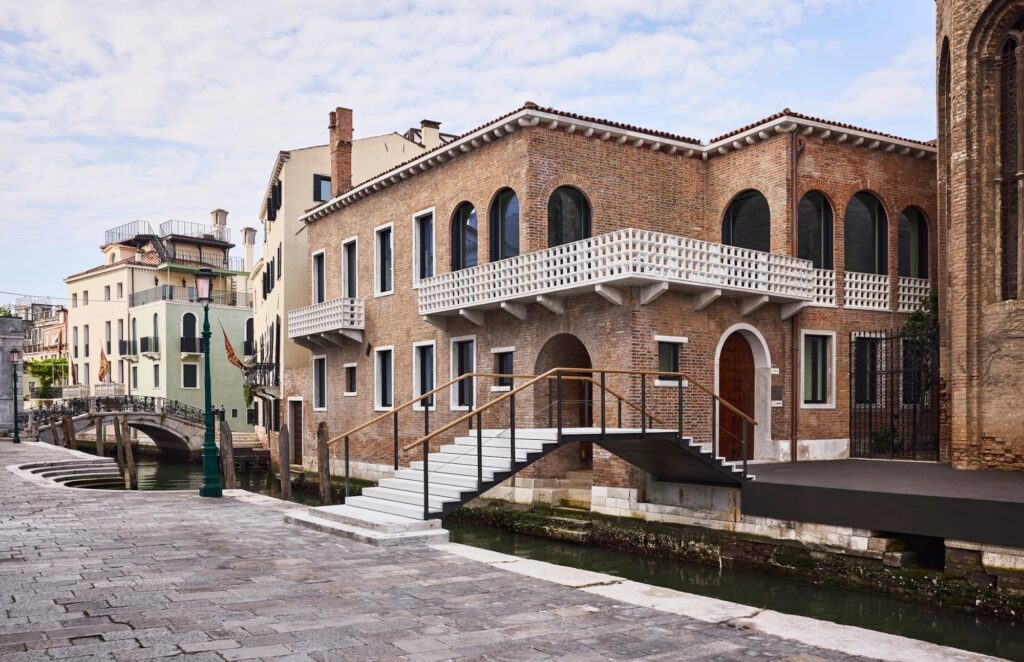
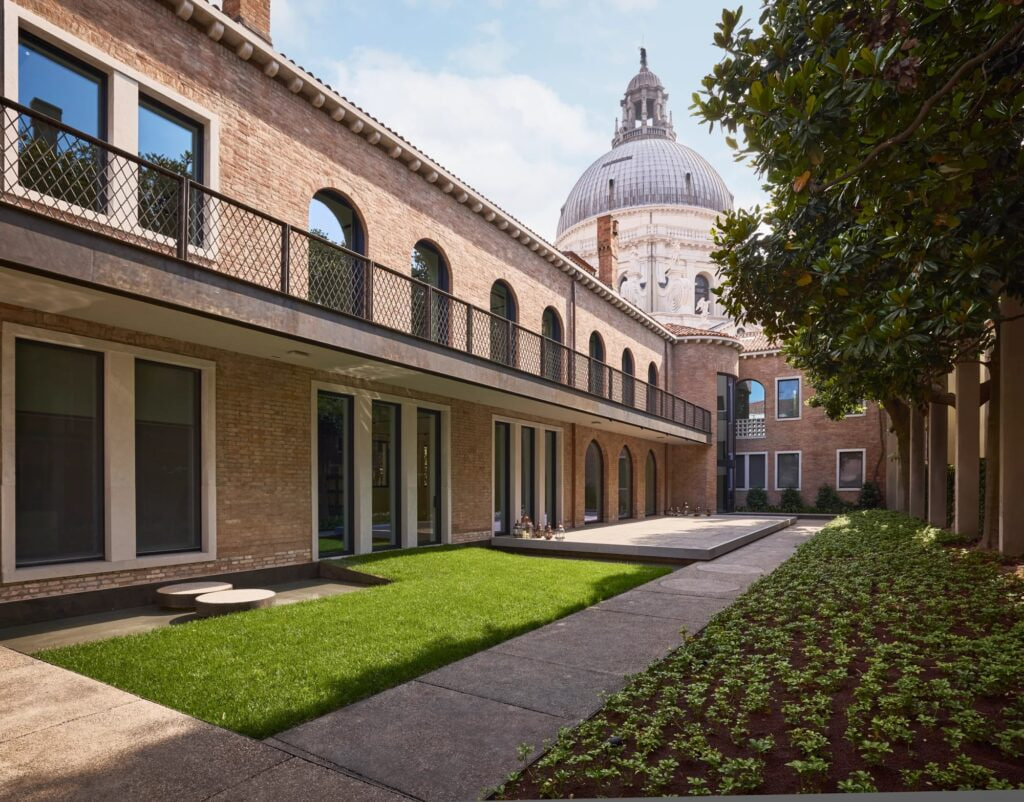
What was once a forgotten 1940s Venetian villa, weathered by time and neglect, now gleams with renewed life. Casa Sanlorenzo is not a reconstruction but a reinvention, where the soul of the building has been preserved and elevated through architectural precision. Lissoni’s approach was clear: retain the memory, yet design for the future. The façade, with its textured brickwork, was carefully restored, while structural reinforcements allow the building to meet the demands of a 21st-century cultural hub.
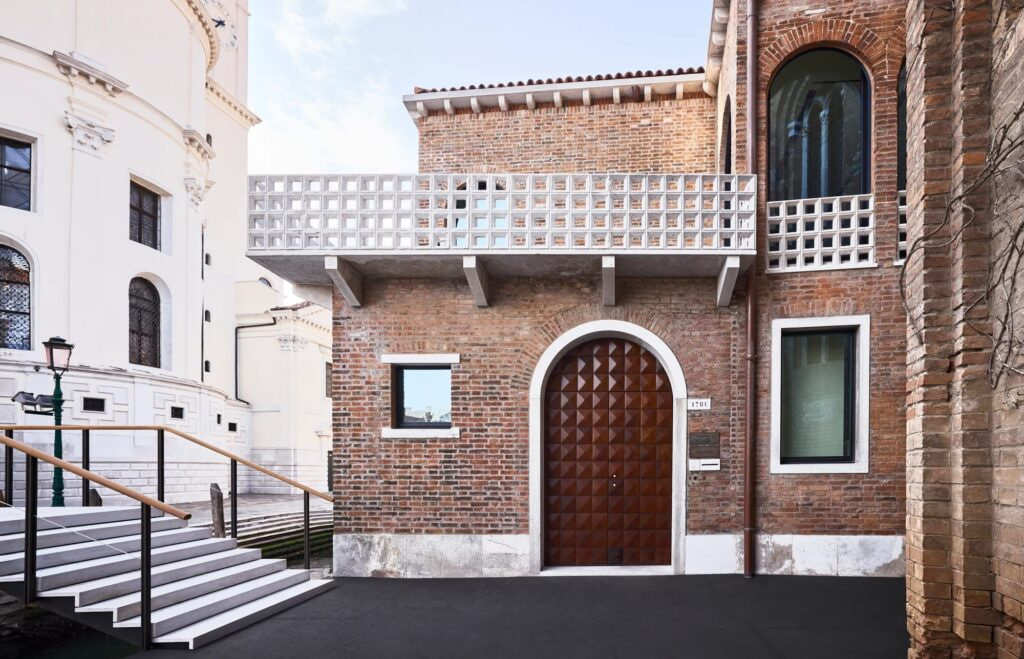
As the doors of Casa Sanlorenzo open to artists, thinkers, and wanderers alike, the building itself becomes part of the exhibition—an evolving canvas of heritage and innovation. Every detail, from the shimmer of Portoro marble to the quiet strength of its net-zero systems, reflects a new chapter for Venice, where design is both memory and promise. In Casa Sanlorenzo, the past is not preserved in silence; it’s reimagined as a living stage for the future.
The Suspended Heart: A Glass Staircase
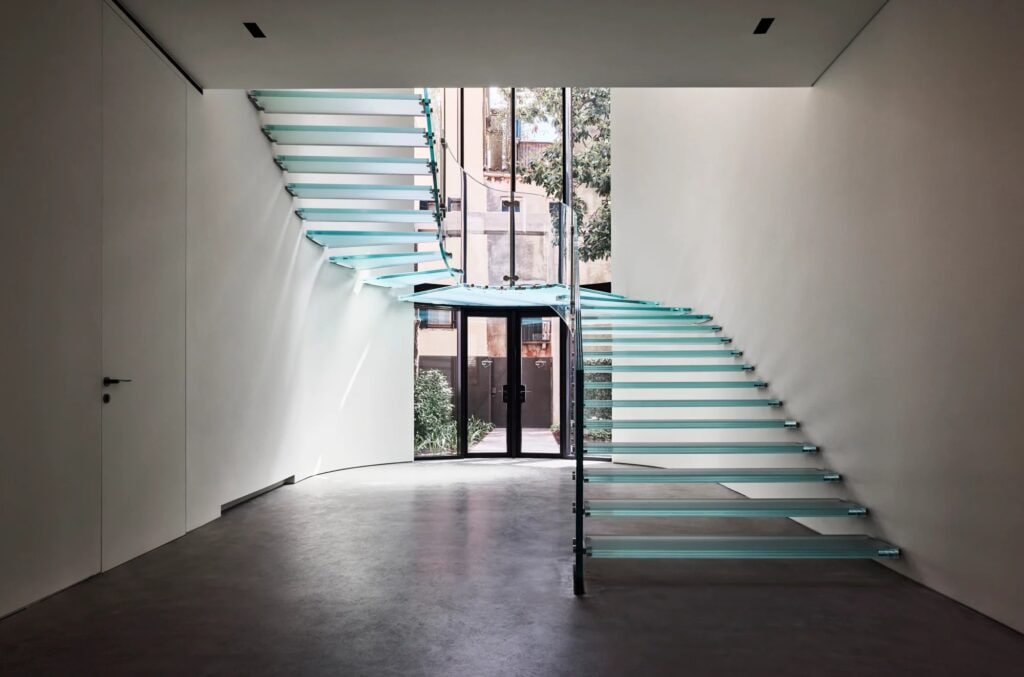
Step inside and the building reveals its boldest gesture: a suspended glass and steel staircase. Transparent and weightless, it hovers where the original stair once stood, echoing its geometry while radically reinterpreting it. This centerpiece is more than circulation—it’s a sculptural spine, bringing light deep into the building and inviting visitors to flow between levels with a sense of openness and continuity.
Location
Italy
Cultural Space
11 September 2025
Photography
Federico Cedrone
Words: Poupak Seyedan
Spaces of Flexibility
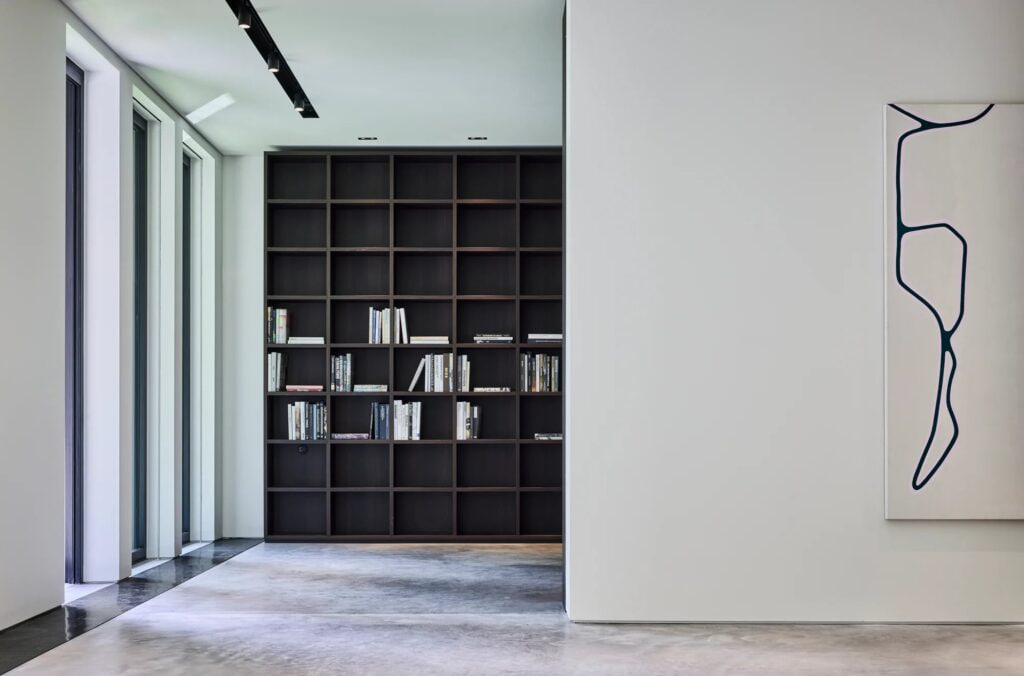
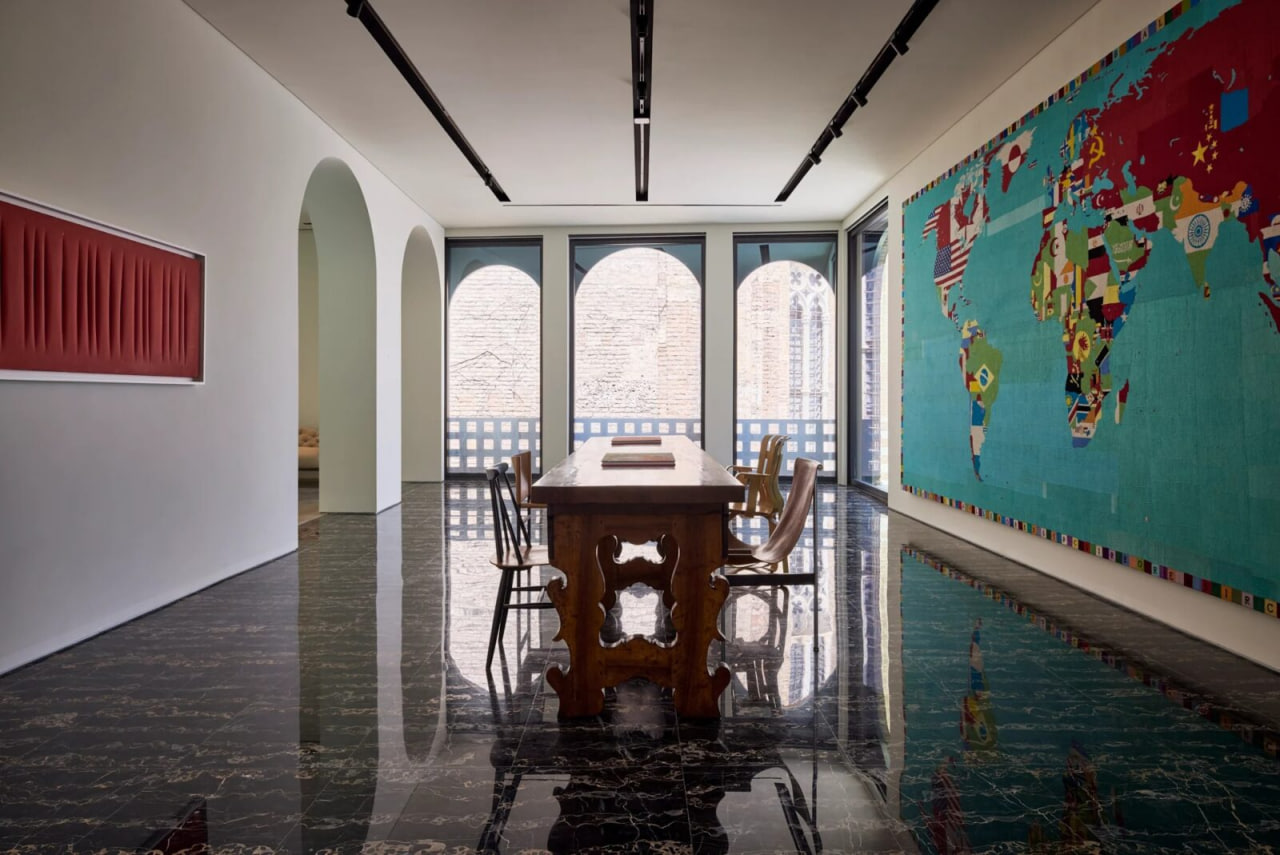
The interiors shed their residential compartments in favor of expansive, flexible galleries. White walls and polished concrete floors act as neutral canvases, designed to adapt to exhibitions of all scales. Mobile partitions and integrated lighting systems allow curators to reconfigure spaces with ease, ensuring that art—not architecture—takes center stage, while still allowing the building’s minimal elegance to resonate.
Material Dialogues
Lissoni’s design thrives on juxtapositions. Historic Palladian and Portoro marble floors coexist with raw concrete; restored brick walls contrast against sleek glass insertions. Each material is chosen to tell a story—of Venice’s layered history and of architecture’s role in sustainability. By reusing original surfaces where possible and introducing recyclable, durable new ones, the project embodies both craft and conscience.
Garden and Bridge: Reconnecting with Venice
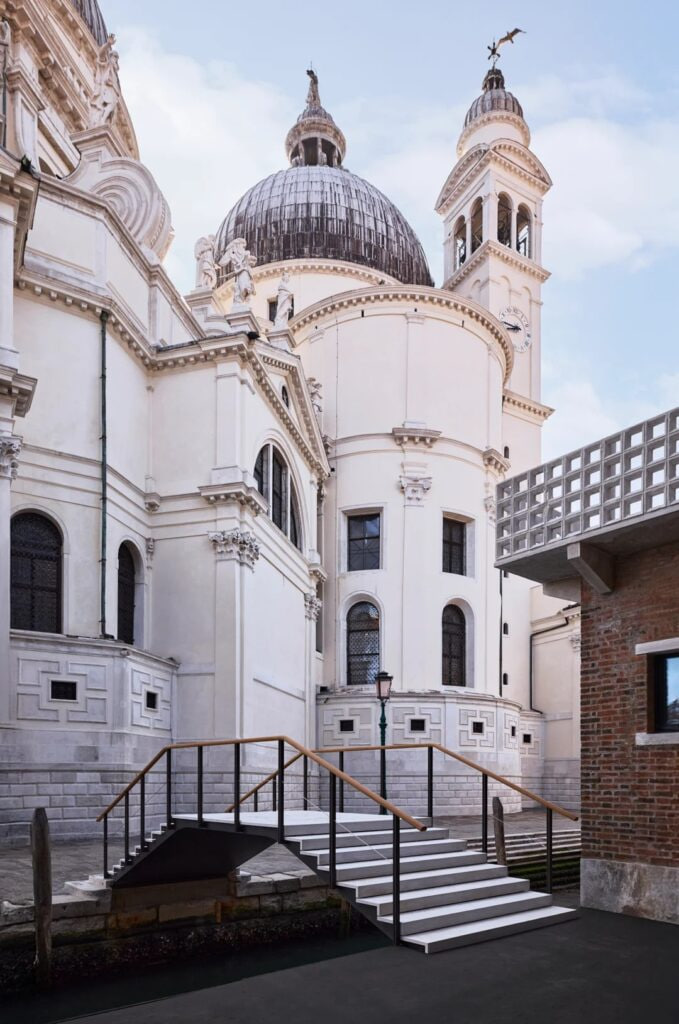
Outside, a new prefabricated metal bridge ushers visitors across the canal, its Istrian stone steps and oar-inspired handrail blending Venetian tradition with modern engineering. Beyond the entrance, a 600-square-meter garden has been revived as a contemplative extension of the interior, where concrete basins and landscaped paths create an interplay of water, greenery, and light. Together, bridge and garden serve as thresholds between city, building, and nature.
Sustainability at the Core
While the design radiates elegance, its hidden strength lies in sustainability. Casa Sanlorenzo now operates at net-zero energy, integrating efficient HVAC, adaptive LED lighting, and high-performance glazing. By reusing the villa’s existing structure and minimizing demolition waste, the project dramatically reduced its embodied carbon footprint. In every sense, this is a building that proves luxury and responsibility can coexist.
Conclusion
Casa Sanlorenzo is more than a renovation—it is a manifesto. In its fusion of memory, material honesty, and sustainable innovation, it shows how architecture can honor the past while shaping a resilient future. For Venice, a city forever negotiating between heritage and reinvention, this luminous villa stands as a symbol of what tomorrow’s cultural spaces can be.