
What is the Bauhaus Movement? A Complete Overview
The Bauhaus was the most influential art, design, and architecture school of the twentieth century. It existed for only fourteen years, yet its ideas reshaped how we live, build, and create. The name itself is telling. Walter Gropius coined it by inverting the German word Hausbau—meaning “building of a house”—to create “Bauhaus,” or “house of building”. This inversion signaled a radical ambition: to reunite all the arts under the roof of architecture.
The school’s mission was clear from the start. Gropius wanted to end the schism between fine artists and craftspeople. . His founding manifesto declared: “Architects, sculptors, painters, we all must return to the crafts!”. There was no essential difference between the artist and the craftsman, he argued. The artist was simply “an exalted craftsman”. This philosophy challenged centuries of hierarchy in the arts. It elevated practical skill to the same level as artistic vision.
The Historical Context: Post-WWI Germany
Germany in 1919 was a country in turmoil. The First World War had ended just months earlier, leaving the nation defeated, traumatized, and politically fractured. . The old imperial order had collapsed. Revolution had swept through the cities. Left and right, conservatives and modernists, labourers and capitalists—all were locked in radical confrontation. The provisional government of the Free State of Saxe-Weimar-Eisenach initiated an effort to reform the art schools in the city of Weimar. This proved to be the moment when Gropius’s vision could take shape.
The cultural landscape was also shifting. Many artists questioned their role in society after the war. Traditional art forms seemed irrelevant to the challenges of the modern age. New media—photography, radio, and film—were becoming increasingly important instruments of artistic expression. In this atmosphere of uncertainty and possibility, the Bauhaus was born. It offered a fresh start. It offered hope.
The Founding by Walter Gropius in 1919
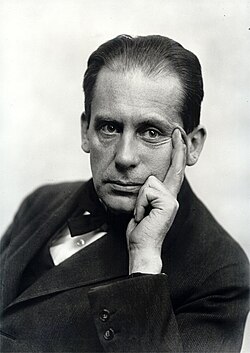
Walter Gropius was just thirty-five years old when he signed his contract as Director of the Bauhaus on 12 April 1919. He had already established himself as a leading modernist architect. Before the war, he had worked in the influential firm of Peter Behrens, alongside Mies van der Rohe and perhaps Le Corbusier.. He had become a member of the Deutscher Werkbund, an organization that promoted the integration of art and industry. This background shaped his vision for the new school.
The Bauhaus emerged from the merger of two existing Weimar institutions: the Grand-Ducal Saxon College of Fine Arts and the College of Applied Arts. Gropius had been recommended for the position by the Belgian architect Henry van de Velde, who had previously directed the applied arts school and was forced to step down due to his status as a foreign national during the war. Negotiations had begun as early as 1915, but it was not until the revolutionary upheavals of 1918 that the merger became possible.
The founding manifesto, published in April 1919, announced Gropius’s programme with “all the emotionalism accompanying the sense of fresh departures after the end of the First World War”. It did not merely demand a new style or form of art. It called for something far more fundamental: a reform of artistic work itself. Artistic work was to return to its foundations in craft. Only craft work, rather than art, was capable of being taught. The school’s curriculum would therefore be based on craft training in workshops. The ideal was a working community of all the arts, reuniting sculpture, painting, and applied arts to establish a new art of architecture.
The first faculty appointments reflected this vision. Lyonel Feininger, a painter, was appointed on 16 April 1919. His woodcut “Cathedral” graced the cover of the manifesto, symbolizing the medieval guild spirit the Bauhaus sought to revive. Gerhard Marcks, a sculptor, joined soon after. Johannes Itten, a painter and art teacher, also came on board. Together with four professors from the former art college, they formed the first teaching staff. Workshops began immediately in the first semester: the gold-silver-copper works, the bookbinding workshop, the weaving workshop, and the graphic printing workshop.
From this modest beginning, the Bauhaus would go on to revolutionize modern design. Its legacy endures today. Nearly every art curriculum includes foundation courses modelled on its approach. Its ideas spread around the world as its faculty and students emigrated. The Bauhaus was more than a school. It was a vision of a better world—a world where good design served everyone, not just the wealthy elite.
The Core Philosophy of Bauhaus Design
Unity of Art and Craft
The Bauhaus philosophy was built upon a radical idea for its time: the elimination of the artificial divide between fine artists and craftspeople. When Walter Gropius founded the school in Weimar in 1919, his founding manifesto declared, “Architects, sculptors, painters, we all must return to the crafts!” . This was not mere rhetoric—it was the foundational principle upon which the entire educational model was constructed.
Gropius believed that artistic creation could only flourish on the basis of handicraft skill, and that the artist was essentially “a more intensive kind of artisan“. The traditional class distinctions that raised “an arrogant barrier between craftsman and artist” were to be abolished . Instead, the Bauhaus envisioned a new guild of creators who would combine artistic vision with technical mastery. This holistic approach, known as Gesamtkunstwerk (total work of art), sought to break down the barriers between creative disciplines and unify architecture, sculpture, painting, and design into a single cohesive expression.
The ideal was beautifully symbolized in Lyonel Feininger’s woodcut of a cathedral, featured in Gropius’s founding manifesto. The image showed a cathedral with three stars at its tip—representing painting, sculpture, and architecture—with their rays interwoven symbolically. Just as medieval stonemasons’ lodges had brought all crafts together to build cathedrals, the Bauhaus aimed to reunite the arts that had been separated by academic institutions.
Art and Technology: A New Unity
The Bauhaus did not remain static in its philosophy. By 1923, a decisive shift occurred. Gropius recognized that the original emphasis on handicrafts alone was insufficient to address the realities of an increasingly technologized and industrialized world . The school adopted a new guiding principle: “Art and technology – a new unity”.
This was a pragmatic and visionary response to the industrial age. The Bauhaus workshops now focused on developing prototypes and models suited for industrial mass production. The goal was no longer to produce unique handmade objects for an elite clientele but to create well-designed, functional products accessible to a wider audience. Gropius stated that the Bauhaus workshops were “primarily laboratories in which models are developed and continually improved for typical products of our time to be produced in series”.
The shift had immediate consequences. Johannes Itten, who championed individual craftsmanship, left the Bauhaus in 1923. From that point forward, engagement with industry and machine production became a prerequisite for all Bauhaus work. The school’s catalogue of patterns, published in 1925, allowed Bauhaus products to be advertised and ordered, generating income and giving the school some financial independence.
Form Follows Function
Perhaps the most famous principle associated with the Bauhaus is the maxim “form follows function.“ While this phrase did not originate with the Bauhaus—it was coined by American sculptor Horatio Greenough in 1852—the school was the first to apply it consistently and systematically in Germany.
The principle dictated that the design of an object should be determined primarily by its purpose, rather than by aesthetic considerations alone. Gropius articulated this approach when he stated that the main principle in design was “research into its essence”: “A thing is determined by its essence. To be able to design it to work properly—be it a container, a chair, or a house—it is necessary to first research its essence; it should serve its purpose perfectly, being practical and functional, long-lasting, inexpensive and ‘beautiful'”. The Bauhaus took this principle to its logical conclusion by rejecting ornamentation and decorative excess. Abstract patterns, embellishments, and “frippery” were intentionally omitted from designs. The aesthetic that emerged was characterized by simple geometric forms, clean lines, and the honest use of materials such as steel, glass, and concrete in their natural, unadorned states.
Marcel Breuer’s Wassily Chair (Model B3), designed in 1925, exemplifies this philosophy. Inspired by the construction of a bicycle, Breuer used tubular steel for the frame, which was then covered in fabric or leather. The design was functional, stripped of ornamentation, and suitable for mass production. Similarly, the MT8 table lamp by Wilhelm Wagenfeld and Carl Jakob Jucker used simple shapes with inner components mostly exposed, eschewing any decorative covering.
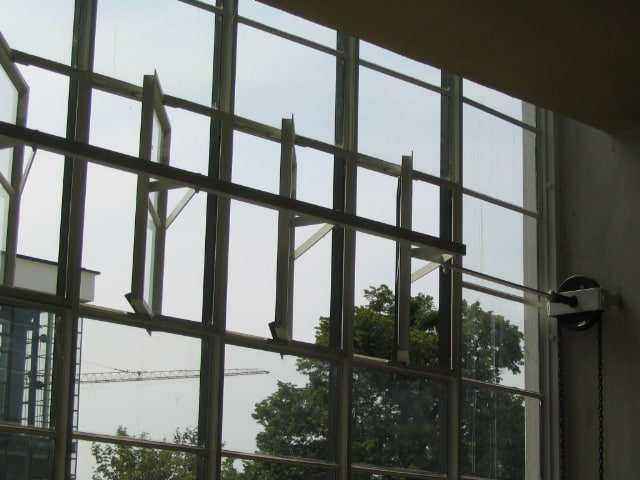
Even the Bauhaus building in Dessau, designed by Gropius in 1925, embodied these principles with its steel-frame construction and glass curtain walls—an architectural expression of form following function.
The Revolutionary Education Model
The Preliminary Course (Vorkurs)
At the heart of the Bauhaus educational revolution was the Preliminary Course (Vorkurs) , a mandatory one-year foundation programme that every student had to complete before entering specialized workshops. This was unprecedented in art education at the time and had to be completely developed from scratch by Walter Gropius. The course was designed not merely to teach technical skills but to foster both the artistic and personal development of students, freeing their minds from conventional approaches and past artistic styles.
In the early years, the Preliminary Course was taught by Johannes Itten, whose approach was deeply spiritual and experimental. Instead of having students copy from models as was done in traditional art academies, Itten encouraged them to produce creative designs based on their own subjective perceptions. His curriculum included experiments with colour, form and material, as well as relaxation exercises to improve physical and visual perception. Drawing from nature, nude drawing, and the analysis of paintings from previous centuries were also part of the programme.
After Itten’s departure in 1923, the Preliminary Course was taken over jointly by László Moholy-Nagy and Josef Albers. Moholy-Nagy shifted the emphasis from artistic issues to technical ones, developing exercises on construction, balance, and materials.Albers was responsible for familiarizing students with craft techniques and the appropriate use of important materials. The course continued to evolve under their leadership, becoming more focused on industrial and technical concerns.
The curriculum was further enriched by additional courses taught by some of the most renowned avant-garde artists of the time. Participation in Wassily Kandinsky’s “Analytical Drawing” and “Colour Seminar,” as well as Paul Klee’s “Elementary Design Theory,” was compulsory for all students. Other supplementary courses included Lothar Schreyer’s “Type Drawing,” Adolf Meyer’s “Technical Drawing,” and Gertrud Grunow’s “Harmonisation Theory,” which explored the connection between sound, movement and colour.
Workshop-Based Learning
The workshop was the cornerstone of the Bauhaus educational model. As Gropius declared in his manifesto, “The school is the servant of the workshop”. his concept marked a clear innovation when compared to classical art academies, which had separated artistic education from practical craft training.
Students were not admitted to workshops until they had successfully completed the Preliminary Course. Once admitted as “apprentices,” they were required to pass their “journeyman’s examination” within a specific timeframe. The workshops were led by a dual system of masters: “form masters,” who were successful avant-garde artists responsible for formal and design questions, and “work masters,” who were trained craftspeople responsible for practical skills. . This dual instruction ensured that students developed both artistic vision and technical proficiency—a revolutionary concept that had never been attempted before.
The first workshops included the gold, silver, and copper workshop (later the metal workshop), the graphic printing workshop, the bookbinding workshop, and the weaving workshop. In 1920, these were followed by workshops for ceramics, glass painting, wall painting, and wood and stone sculpture. The carpentry and theatre workshops were founded in 1921. Over time, the workshop system expanded and evolved. In the early Weimar years, the workshops included carpentry, stained glass, pottery, metal, weaving, stage, and wall-painting. The textile workshop, in particular, produced abstract textiles suitable for use in Bauhaus environments and encouraged experimentation with unorthodox materials such as cellophane and metal. The metalworking workshop, along with the cabinetmaking studio, was the most successful in developing design prototypes for mass production, creating iconic items such as lighting fixtures and tableware. Under the second director, Hannes Meyer, the curriculum was reorganised—several workshops were merged, photography was introduced as a subject, and greater emphasis was placed on collaborative construction projects and scientific analysis. Under the third director, Ludwig Mies van der Rohe, the Bauhaus developed into more of a college of technology for architecture, and the importance of workshop work was reduced.
Iconic Designs from the Workshops: Marcel Breuer’s Wassily Chair
Perhaps no design better exemplifies the Bauhaus commitment to functional, mass-producible design than Marcel Breuer’s Club Chair (Model B3), famously known as the Wassily Chair. Designed in 1925 while Breuer was teaching at the Bauhaus, this chair took furniture in a radical new direction and became one of the most influential pieces of design of the twentieth century.
The inspiration for the chair came from a most unexpected source: Breuer’s bicycle. At the age of 23, Breuer observed how bicycle handlebars were made—steel tubes bent like macaroni—and realised that this material could be used to create a lightweight, elastic, and transparent chair. He reasoned that if tubular steel could be bent into handlebars, it could also be bent into frames for furniture—strong, lightweight, and suitable for mass production.
The resulting design was groundbreaking. The chair featured a chrome-plated tubular steel frame with canvas seat, back, and arms that seemed to float in space; the body of the sitter did not touch the steel framework. Breuer himself described the chair as his “most extreme work… the least artistic, the most logical, the least ‘cozy’ and the most mechanical”. Despite his concerns that the revolutionary design might attract criticism, the chair quickly became a Bauhaus icon.
Initially, Breuer lacked the technical knowledge to build furniture from tubular steel. He produced the first prototype in 1925 with the help of a locksmith from the Junkers aircraft works in Dessau. The chair was later manufactured by Standard-Möbel, a company Breuer founded in Berlin specifically for this purpose, which was eventually taken over by the Thonet company.
The chair received its famous name from Wassily Kandinsky, Breuer’s friend and fellow Bauhaus instructor, who praised the design when it was first produced. It was not until a re-edition by the Italian company Gavina in 1962 that the name “Wassily” was officially adopted and the chair achieved its status as a design classic.
Key Figures of the Bahaus Movement
Walter Gropius
Walter Gropius founded the Bauhaus in Weimar in April 1919. He was just 35 years old at the time. His vision was ambitious. He wanted to create a new type of artist. He sought to forge “a new guild of craftsmen”. The name Bauhaus itself referenced medieval masons’ lodges. This reflected his romantic ideal of community and craftsmanship.
Before the Bauhaus, Gropius had already established himself as a leading modernist architect. He was committed to rationalism and the “machine aesthetic”. He drew inspiration from factory architecture and industrial standardization. However, his experience of mechanized warfare in World War I changed him. It forced him to rethink his commitment to industry. By 1919, he had become increasingly focused on Expressionism, romanticism, and socialism in architecture .
Gropius recruited major international figures to teach at the school. His earliest recruits included Lyonel Feininger, Johannes Itten, and Gerhard Marcks. He later hired Paul Klee, Oskar Schlemmer, and Vassily Kandinsky. His conviction was clear: a revolutionary form of spiritual expression should not be confined to fine art. He sought to imbue everyday objects with artistic spirit .
As director, Gropius shaped the school’s philosophy. He later reflected on his major influences: John Ruskin, William Morris, Henry Van de Velde, and Peter Behrens. These were people who “consciously sought and found the first ways to the reunification of the world of work with the creative artists.” Gropius led the Bauhaus until 1928. He then handed management to Hannes Meyer. His visionary ideas still influence how we live, work, and think today.
Paul Klee and Wassily Kandinsky
Paul Klee and Wassily Kandinsky were two of the most celebrated artists to teach at the Bauhaus. They joined the faculty alongside other renowned figures such as Lyonel Feininger and Oskar Schlemmer.
Klee and Kandinsky taught courses on color and form. Their classes were compulsory for all students. Kandinsky offered “Analytical Drawing” and a “Colour Seminar.” Klee taught “Elementary Design Theory.” Both artists were entirely free to decide the content and character of their lessons.
The school’s early years were marked by controversies about the role of art. Some masters saw themselves primarily as personal role models. However, Klee and Kandinsky recognized that the Bauhaus aspired to become a purpose-led academy. They wanted to explore the universal laws of form and color. They were not interested in creating a recipe for art production. Instead, they saw their principles as models for developing various art disciplines.
In 1926, Kandinsky explained the role of artists in teaching design principles: “Painting is seen as a co-organising force”. Both Klee and Kandinsky endorsed modernism at a time when modern art and abstraction were far from accepted. Contemporaries understood the Bauhaus as a post-war rebellion, similar to the Dada movement.
Marianne Brandt and Anni Albers
Marianne Brandt and Anni Albers were among the most influential women at the Bauhaus. They both defied the gender stereotypes of their time.
Marianne Brandt joined the Bauhaus in 1923 at the age of 31. She was a trained painter. However, László Moholy-Nagy invited her to join the metal workshop. She was the first woman to do so.Other male students did not welcome her at first. They gave her dull, dreary work, such as hammering hemispheres out of brittle new silver.Despite this, Brandt excelled. Within four years, she succeeded Moholy-Nagy as acting head of the metal workshop.
Brandt fully embraced functionalism. She wanted to return to “the simplest of forms”. Her early student designs included a geometric silver-and-ebony tea infuser. She also designed a chic brass ashtray . However, her most famous work was the Kandem bedside table lamp. She designed it with fellow student Hinrich Bredendieck in 1928. The lamp became a top seller, with more than 50,000 units produced. Brandt’s teapot from 1924 is now in the Museum of Modern Art’s collection.
Anni Albers wanted to become a painter when she arrived at the Bauhaus. However, like most female students, she was steered toward weaving. She later recalled how “threads caught me against my will”. The Weaving Workshop proved to be one of the school’s most innovative departments. Albers’s textiles helped revolutionize twentieth-century modern design.
Albers studied under Paul Klee and was influenced by his color theories. She also drew inspiration from ancient Andean textiles. For her 1929 diploma project, she developed a multifunctional wall-covering material. It could absorb sound and reflect light. She believed that the “quality of inner structure is, above all, a matter of function.” She maintained that the “good designer is the anonymous designer”.
After the Bauhaus closed in 1933, Albers and her husband Josef secured teaching positions at Black Mountain College in North Carolina. She spent 16 years there. In 1949, she had a solo retrospective at MoMA—the museum’s first exhibition devoted to a textile artist. Albers continued to challenge distinctions between art and craft throughout her career. Her legacy is a testament to how the Bauhaus’s pioneering figures transformed modern design.
Where Was the Bauhaus Located?
The Bauhaus operated in three different German cities during its brief but impactful history . Each location represented a distinct phase in the school’s evolution, shaped by local politics, economic conditions, and the changing vision of its directors.
Weimar (1919-1925)
The Bauhaus was founded in Weimar in April 1919. Walter Gropius united the Grand Ducal School of Fine Arts with the Grand Ducal School of Arts and Crafts to create the new institution. The city held deep cultural significance. It was the home of Goethe and Schiller, and it had hosted Germany’s national assembly in 1919.
During these early years, the Bauhaus attracted an international student body. Around 150 to 200 students enrolled each semester, with women making up 25 to 50 percent and foreign students accounting for 17 to 33 percent . The faculty included avant-garde masters like Johannes Itten, Paul Klee, Wassily Kandinsky, and Oskar Schlemmer.
Political pressure soon mounted. Conservative politicians viewed the school as “left-wing” and “Bolshevist”. In February 1924, right-wing parties gained a majority in the Thuringian state legislature . They slashed the Bauhaus budget by half and cancelled the teachers’ contracts. Gropius and his faculty resigned in December 1924. The school closed in Weimar in 1925 .
The school buildings in Weimar, designed by Henry van de Velde, are now UNESCO World Heritage Sites.
The Bauhaus moved to Dessau in 1925. This industrial town, governed by social democrats, offered a more welcoming environment. The city supported the school financially and provided land for a new building.
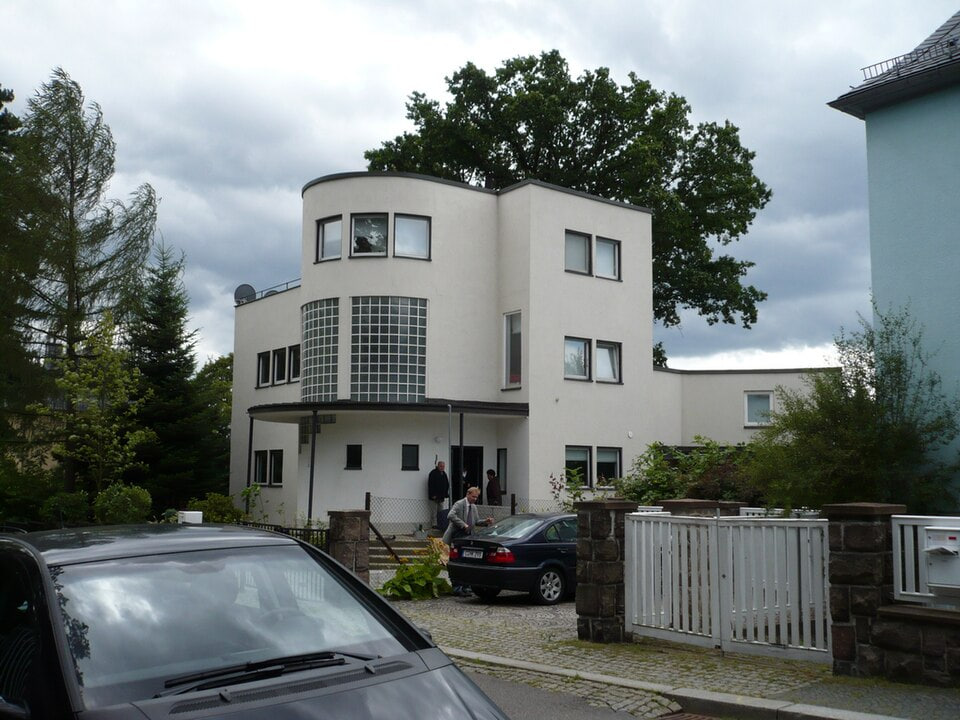
Gropius designed the iconic Bauhaus building, which opened in 1926. Its steel-frame construction and glass curtain walls embodied the school’s functionalist principles. The Masters’ Houses, where faculty like Klee and Kandinsky lived, were built nearby.
The Dessau years marked the school’s most productive and successful era. Gropius shifted the curriculum toward industrial production with the slogan “Art and technology – a new unity”. The workshops developed prototypes for mass production, including the Wassily Chair and the Wagenfeld lamp.
Hannes Meyer took over as director in 1928. He emphasized scientific analysis, functional design, and social responsibility. However, his left-wing politics drew criticism. The Nazi Party grew in influence locally, and Meyer was dismissed in 1930.
Ludwig Mies van der Rohe became the third director. He tried to depoliticize the school, but the pressure continued. On 22 August 1932, the Nazi-controlled Dessau city council voted to close the Bauhaus effective 1 October.
Berlin (1932-1933)
Mies van der Rohe moved the Bauhaus to Berlin in October 1932. (R1)(R2). The school occupied an abandoned telephone factory in the Steglitz district. It operated as a private institution called the “Free Teaching and Research Institute”.
Financial support came from licensing income and a salary guarantee for the teachers. But the political situation worsened. On 11 April 1933, the Gestapo raided the building and sealed the premises. Police arrested 32 students.
A reopening would only have been possible under conditions dictated by the Nazis. Mies van der Rohe found these terms unacceptable. On 20 July 1933, the teaching staff voted to dissolve the Bauhaus. The school that had revolutionized modern design was no more.
The closure triggered a mass emigration of Bauhaus faculty and students. They spread the school’s ideas across the globe—to the United States, Palestine, the Soviet Union, and beyond. The Bauhaus legacy, in this sense, had only just begun.
Glubal Legacy & Conclusion
The Bauhaus was more than a school. It was a vision of a better world. In just fourteen years, this small German institution transformed how we think about design, architecture, and art. Its core principles—form follows function, the unity of art and craft, and design for the masses—remain essential guides for creators today.
The Bauhaus legacy lives on in every minimalist chair, every glass-curtain skyscraper, and every foundation course taught in art schools worldwide. Its ideas spread across the globe when the Nazis forced its closure in 1933. Former faculty and students carried the Bauhaus ethos to America, Palestine, the Soviet Union, and beyond.
Perhaps the school’s greatest achievement was its belief that good design should serve everyone. This democratic vision remains as relevant today as it was in 1919. The Bauhaus reminds us that design is not merely about aesthetics. It is about improving people’s lives.
So, next time you sit on a simple, functional chair or admire a glass-and-steel building, remember: you are experiencing the legacy of a school that dared to dream of a better world through design. That dream endures. And it continues to inspire.
Frequently Asked Questions (FAQs)
The Bauhaus was forced to close due to mounting political pressure from the Nazi party, who viewed it as a hub for “left-wing” and “Bolshevist” ideas. The school’s commitment to modernism and internationalism clashed with the Nazis’ nationalist and classical ideals.The closure happened in stages. It first lost its state funding in Weimar in 1925 and relocated to Dessau. Despite a productive period there, the Nazi party gained influence in the city council. On August 22, 1932, they voted to close the school. The final director, Ludwig Mies van der Rohe, tried to keep it alive by moving it to an abandoned factory in Berlin, but the Gestapo raided the premises in April 1933. Facing impossible terms for its reopening, the teaching staff voted to dissolve the Bauhaus in July 1933, ending the school’s fourteen-year run.
The core philosophy of the Bauhaus was to unify art, craft, and technology to create functional and beautiful objects for a modern industrial society. This was expressed through several key principles:
Unity of Art and Craft: Walter Gropius believed there should be no division between the fine artist and the craftsman. He saw the artist as an “exalted craftsman” and based the school’s curriculum on hands-on workshop training.
Art and Technology – A New Unity: While initially focused on craft, the school shifted its focus by 1923 to embrace industrial mass production, believing good design should be accessible to everyone, not just the elite.
Form Follows Function: Bauhaus designers rejected unnecessary ornamentation. They believed that a product’s design should be determined by its purpose, resulting in simple, geometric shapes, clean lines, and an honest use of materials like steel, glass, and concrete.
The Bauhaus existed in three different German cities, and many of its iconic buildings are still standing and are open to the public. The original school in Weimar and the later complex in Dessau are both designated as UNESCO World Heritage Sites. You can visit the landmark Bauhaus Building and the Masters’ Houses in Dessau, which were designed by Walter Gropius and feature his trademark glass curtain walls. After its forced closure in Dessau in 1932, the school briefly moved to an abandoned telephone factory in Berlin, which is also a protected historical monument today.
Sources & Further Reading
Archives & Museums
- Bauhaus-Archiv Berlin / Museum für Gestaltung. “1919–1933.” https://dev.bauhaus.de/en/das_bauhaus/48_1919_1933/
- Bauhaus-Archiv Berlin / Museum für Gestaltung. “Idea.” https://dev.bauhaus.de/en/das_bauhaus/44_idee/
- Bauhaus-Archiv Berlin / Museum für Gestaltung. “Preliminary Course, Workshops and Bauhaus Diploma.” https://www.bauhaus.de/en/discover/article/preliminary-course-workshops-and-bauhaus-diploma/
- Bauhaus-Archiv Berlin / Museum für Gestaltung. “Programme.” https://dev.bauhaus.de/en/das_bauhaus/610_programm/
- Bauhaus-Archiv Berlin / Museum für Gestaltung. “Teaching at the Bauhaus.” https://dev.bauhaus.de/en/das_bauhaus/45_unterricht/
- Bauhaus-Archiv Berlin / Museum für Gestaltung. “14 Years of Bauhaus.” https://www.bauhaus.de/en/discover/article/14-years-of-bauhaus/
- Bauhaus Kooperation. “Bauhaus Berlin.” https://bauhauskooperation.com/knowledge/the-bauhaus/phases/berlin
- Bauhaus Kooperation. “Bauhaus Dessau.” https://bauhauskooperation.com/knowledge/the-bauhaus/phases/bauhaus-dessau
- Bauhaus Kooperation. “Bauhaus Weimar.” https://bauhauskooperation.com/knowledge/the-bauhaus/phases/bauhaus-weimar
- Bauhaus Kooperation. “Fine Arts.” https://bauhauskooperation.de/en/knowledge/the-bauhaus/training/curriculum/fine-arts
- Bavarikon. “Clubsessel B3 ‘Wassily’.” https://www.bavarikon.de/object/bav:DNS-OBJ-0000000000009114?lang=en
- Cooper Hewitt, Smithsonian Design Museum. “Walter Gropius.” https://www.collection.cooperhewitt.org/people/18537963/bio
- Getty Museum. “Architecture – Bauhaus.” https://www.getty.edu/research/exhibitions_events/exhibitions/bauhaus/new_artist/body_spirit/architecture/
- Getty Museum. “History of the Bauhaus.” https://www.getty.edu/research/exhibitions_events/exhibitions/bauhaus/new_artist/history/
- Getty Museum. “Masters and Apprentices.” https://www.getty.edu/research/exhibitions_events/exhibitions/bauhaus/new_artist/history/masters_apprentices/
- Getty Museum. “Principles and Curriculum.” https://www.getty.edu/research/exhibitions_events/exhibitions/bauhaus/new_artist/history/principles_curriculum/
- Harvard Art Museums. “Art in Germany Between the Wars.” https://harvardartmuseums.org/visit/floor-plan/1/1520
- Metropolitan Museum of Art. “The Bauhaus, 1919–1933.” Heilbrunn Timeline of Art History. https://www.metmuseum.org/toah/hd/bauh/hd_bauh.htm
- MoMA | Museum of Modern Art. “Anni Albers.” https://www.moma.org/artists/96-anni-albers
- MoMA | Museum of Modern Art. “Marcel Breuer. Club chair (model B3 / Wassily). 1927–1928.” https://www.moma.org/collection/works/2851
- MoMA | Museum of Modern Art. “Marianne Brandt. Teapot. 1924.” https://www.moma.org/collection/works/2438
- MoMA | Museum of Modern Art. “Modern Teachers.” https://www.moma.org/modernteachers/files/MAI4_3.pdf (PDF)
- National Galleries of Scotland. “Bauhaus.” https://www.nationalgalleries.org/art-and-artists/glossary-terms/bauhaus
- SFMOMA | San Francisco Museum of Modern Art. “Marcel Breuer.” https://www.sfmoma.org/artist/Marcel_Breuer/
- Stiftung Bauhaus Dessau. “Chronology.” https://bauhaus-dessau.de/en/institution/chronology/
- Thüringisches Hauptstaatsarchiv Weimar. “Die Gründung des Staatlichen Bauhauses in Weimar 1919.” https://www.thueringen.de/mam/th1/staatsarchive/sk/folge_18.pdf (PDF)
- UNESCO World Heritage Centre. “Bauhaus and its Sites in Weimar, Dessau and Bernau.” https://whc.unesco.org/en/list/729/
- Victoria and Albert Museum. “Bauhaus.” https://www.vam.ac.uk/articles/bauhaus
- Victoria and Albert Museum. “Bauhaus anniversary – perusing a prospectus from Bauhaus Dessau.” https://www.vam.ac.uk/blog/design-and-society/bauhaus-anniversary-perusing-a-prospectus-from-bauhaus-dessau
- ZKM | Zentrum für Kunst und Medien. “6. Radical Pedagogy.” https://zkm.de/en/6-radical-pedagogy
- ZKM | Zentrum für Kunst und Medien. “8. Art, Crafts, Technology.” https://zkm.de/en/8-art-crafts-technology
General & Cultural References
- Britannica, The Editors of Encyclopaedia. “Bauhaus.” Encyclopedia Britannica, 29 May 2026. https://www.britannica.com/topic/Bauhaus
- Core77. “Marianne Brandt, Bauhaus Powerhouse.” https://www.core77.com/posts/36776
- Design Week. “Bauhaus: What was it and why is it important today?” 17 Feb 2019. https://www.designweek.co.uk/issues/18-24-february-2019/bauhaus-what-was-it-and-why-is-it-important-today/
- Domus. “Bauhaus movement: architecture, art and design.” https://www.domusweb.it/en/movements/bauhaus.html
- Dorotheum. “Fundamentally not an ornament – the Bauhaus.” https://www.dorotheum.com/en/b/fundamentally-not-an-ornament-the-bauhaus/
- Gear Patrol. “The Bauhaus Is One of the Most Influential Design Movements in History.” https://www.gearpatrol.com/briefings/a609440/influence-of-the-bauhaus-movement/
- German History in Documents and Images. “The Global Reach of the Bauhaus School (1919-1933).” https://germanhistorydocs.org/en/weimar-germany-1918-1933/ghdi:map-5012
- Goethe-Institut. “In a nutshell: six sentences that encapsulate the Bauhaus.” https://www.goethe.de/ins/ca/en/kul/kue/bau/21376378.html
- Google Books. “Walter Gropius: Visionary Founder of the Bauhaus.” https://books.google.com.sg/books?id=-1SUswEACAAJ
- Patterns Repository. “Bauhaus Design Philosophy.” https://github.com/commons-os/patterns/blob/main/_patterns/bauhaus-design-philosophy.md
- Routledge Encyclopedia of Modernism. “Bauhaus.” https://www.rem.routledge.com/articles/overview/bauhaus-1
Books
- Bayer, Herbert; Gropius, Walter; Gropius, Ise (eds.). Bauhaus, 1919-1928. New York: Museum of Modern Art, 1938.
- Breuer, Marcel. Marcel Breuer: Sun and Shadow. New York: Dodd, Mead & Company, 1955.
- Droste, Magdalena. Bauhaus 1919-1933. Cologne: Taschen, 2019.
- Gropius, Walter. The New Architecture and the Bauhaus. London: Faber & Faber, 1935.
- Whittford, Frank. Bauhaus. London: Thames & Hudson, 1984.
Explore more on our blog
Exploring the Essence of Gothic Architecture
Gothic architecture emerged in the 12th century in France and spread across Europe, shaping the High and Late Middle[…]
How to Calculate Lux And Lumens
In lighting design, lux and lumens are two essential units used to measure the amount and intensity of light.[…]
Comments are closed