
What happens when architecture turns its attention from the heavens to the human world?
In 15th-century Italy, a new architectural language began to emerge. After centuries in which Gothic architecture had shaped European buildings with soaring forms, pointed arches, and elaborate vertical compositions, architects began exploring a different way to create beauty. They looked to the buildings of ancient Greece and Rome, studied geometry, and searched for a more measured relationship between structure, space, and the human body.
This movement became known as Renaissance architecture. Its name refers to a cultural “rebirth,” but its architectural significance was not simply a return to the past. Renaissance architects used historical ideas to develop new approaches to construction, composition, and spatial experience.
The movement began in Italy and gradually influenced architecture across Europe. Its principles continue to appear in buildings and interiors today, making it an important subject for anyone interested in architectural history, interior design, and the relationship between beauty and function.
From Gothic Architecture to Renaissance
The transition from Gothic to Renaissance architecture was gradual rather than a sudden replacement.
Gothic architecture had developed a powerful visual language based on height, pointed arches, ribbed vaults, and the expressive use of light. Renaissance architects did not reject every medieval technique. Instead, they increasingly looked for inspiration in classical architecture and sought to organize buildings through clearer geometric relationships.
Florence became an important centre of this change. Architects, artists, and scholars studied ancient Roman buildings and explored how their principles could be adapted to contemporary churches, palaces, and public spaces.
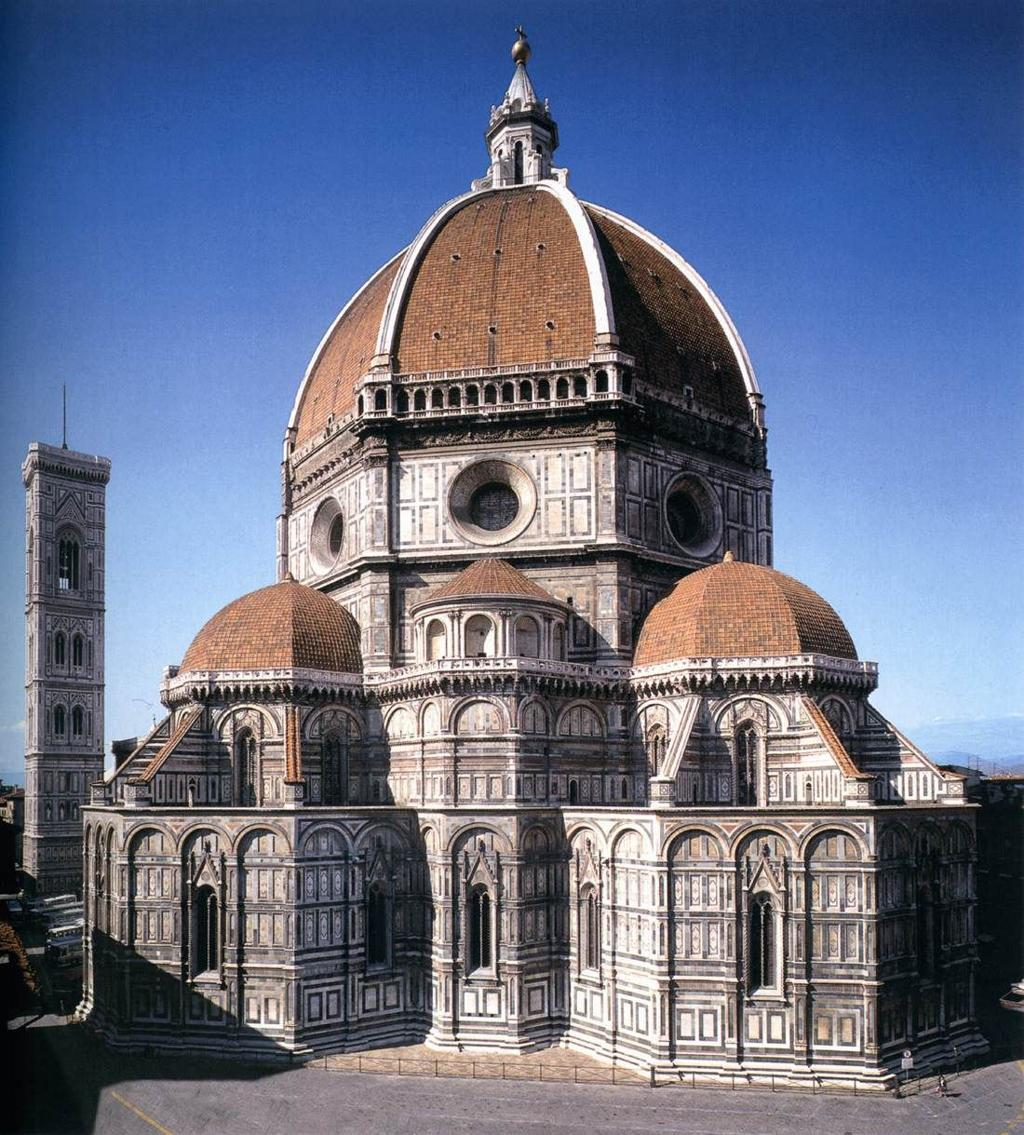
One of the most influential figures was Filippo Brunelleschi, whose work helped establish a new architectural direction. His dome for Florence Cathedral demonstrates how Renaissance design could combine historical inspiration with ambitious structural innovation.
What Are the Main Characteristics of Renaissance Architecture?
1. Proportion and Symmetry
Renaissance architects paid close attention to the relationships between architectural elements.
The width of a room, the height of a façade, the spacing of windows, and the arrangement of columns could all contribute to a building’s overall harmony. Rather than treating each element as an isolated detail, architects considered how the parts worked together.
This interest in proportion became one of the defining features of Renaissance architecture and remains relevant to contemporary interior design.
2. Classical Architectural Forms
Columns, pilasters, pediments, entablatures, and round arches became important elements of the Renaissance architectural vocabulary.
These forms were inspired by ancient buildings, but Renaissance architects adapted them to new projects. Classical details could help establish rhythm, hierarchy, and a sense of order across a façade or interior.
3. Geometry and Spatial Clarity
Geometry played an important role in Renaissance design.
Architects used shapes such as squares, circles, and rectangles to organize buildings and create relationships between different spaces. This approach encouraged a clearer understanding of how a building was composed.
In interior architecture, the same principle can be seen in the careful arrangement of rooms, openings, circulation routes, and decorative elements.
4. Domes and Rounded Arches
Renaissance architecture frequently used rounded arches and domes, drawing inspiration from classical Roman construction.
These forms could create monumental spaces while also reinforcing the movement’s interest in geometry and balance. Brunelleschi’s dome in Florence is one of the most famous examples of this approach.
5. A Stronger Relationship Between Structure and Decoration
Renaissance architects increasingly considered decoration as part of a building’s overall composition.
Columns, windows, mouldings, and other details were often arranged to support the building’s proportions and visual rhythm. This helped create a more unified relationship between structure and ornament.
Three Architects Who Shaped Renaissance Architecture
Filippo Brunelleschi
Brunelleschi is one of the central figures of early Renaissance architecture.
His most famous achievement is the dome of Santa Maria del Fiore, Florence Cathedral. The dome was completed in 1436 and became a landmark of architectural and engineering history.
His work also includes the Basilica of San Lorenzo, the Pazzi Chapel, and the Ospedale degli Innocenti. These buildings demonstrate his interest in geometry, proportion, and the use of classical architectural elements.
Leon Battista Alberti
Alberti helped develop Renaissance architecture as both a practical discipline and a field of architectural theory.
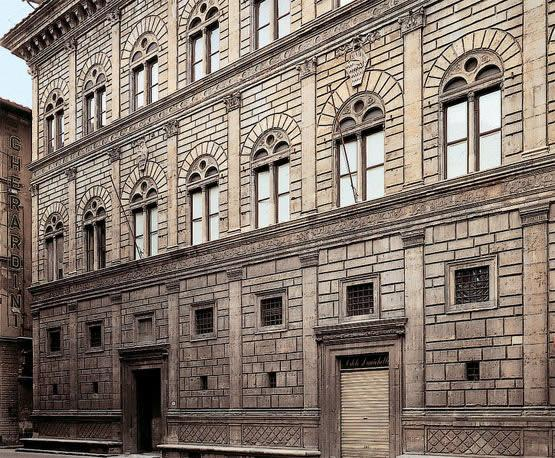
His Palazzo Rucellai in Florence is an important example of Renaissance domestic architecture. The building’s façade is organized through horizontal divisions and classical pilasters, creating a carefully controlled composition.
Alberti’s work demonstrates how Renaissance principles could be applied to urban residences as well as monumental religious buildings.
Donato Bramante
Bramante became an important figure in the High Renaissance, particularly through his work in Rome.
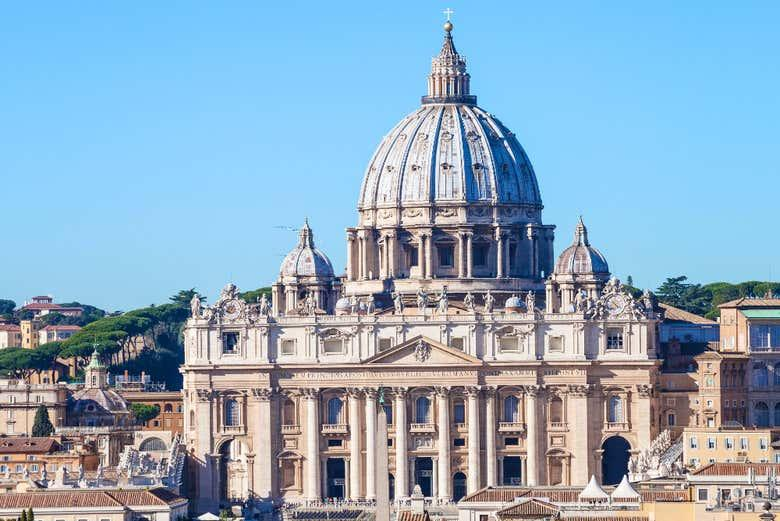
His Tempietto, a small circular temple, is often associated with the movement’s interest in classical form and geometric clarity. He also contributed to the early design of St. Peter’s Basilica, one of the most significant architectural projects of the period.
Famous Examples of Renaissance Architecture
Florence Cathedral, Italy
The dome of Florence Cathedral is one of the clearest examples of the transition toward Renaissance architecture.
Although the cathedral itself began as a Gothic project, Brunelleschi’s dome introduced a new architectural and engineering achievement. Its large scale, geometric organization, and innovative construction made it a defining symbol of the Renaissance.
Palazzo Rucellai, Florence
Designed by Leon Battista Alberti, Palazzo Rucellai is a significant example of Renaissance palace architecture.
Its façade uses classical architectural elements to create a balanced and ordered appearance. The building shows how Renaissance ideas could transform the design of an urban residence, not only a church or civic monument.
St. Peter’s Basilica, Vatican City
St. Peter’s Basilica represents the monumental ambition of Renaissance architecture.
Its design developed through the work of several major architects, including Bramante and Michelangelo. The building demonstrates how Renaissance principles could be applied to a project of extraordinary scale, combining classical forms, monumental space, and religious architecture.
Renaissance Architecture and Interior Design
The influence of Renaissance architecture extends beyond historic façades and monumental buildings.
For interior architects, the movement offers a valuable way to understand how proportion, geometry, material, and decoration can work together.
A Renaissance-inspired interior might include:
- Balanced room proportions
- Symmetrical arrangements
- Classical architectural details
- Natural stone and carefully crafted wood
- Geometric floor patterns
- A clear relationship between structure and decoration
- A considered connection between rooms and circulation
However, contemporary designers do not need to reproduce historical interiors literally. Renaissance principles can be interpreted through modern materials, simplified forms, and new approaches to spatial planning.
The important lesson is not to copy the past, but to understand how architectural decisions create a coherent experience.
Why Renaissance Architecture Still Matters
Renaissance architecture changed the way architects approached design.
It encouraged the study of architectural history, the use of geometry, and the development of architecture as a discipline with its own theories and methods. Its influence can be seen in later movements such as Baroque and Neoclassical architecture, as well as in many contemporary buildings that use classical proportions and ordered compositions.
For interior architecture, Renaissance design remains relevant because it demonstrates how clarity, balance, and human experience can contribute to the quality of a space.
Conclusion
Renaissance architecture marked a new chapter in European architectural history. Emerging after Gothic architecture, it brought renewed attention to classical ideas, mathematical proportion, geometry, and the relationship between architectural elements.
From Brunelleschi’s dome to Alberti’s Palazzo Rucellai, Renaissance buildings show how historical knowledge and technical innovation can produce new architectural possibilities.
For contemporary interior architects and designers, the movement offers an enduring lesson: a well-designed space is not only about individual details, but about how every element contributes to a larger sense of harmony, function, and beauty.
The next major movement in the historical sequence is Baroque architecture.
- The first image, from left to right: Brunelleschi’s Dome of Florence Cathedral: A Landmark of Renaissance Architectural Innovation. Completed in the 15th century, the dome of Santa Maria del Fiore represents a turning point in architectural history, combining classical inspiration with advanced engineering. Image source: https://commons.wikimedia.org/wiki/Category:Duomo_(Florence)
- The second image, from left to right: Palazzo Rucellai: Renaissance Principles Applied to Urban Residential Architecture Designed by Leon Battista Alberti, Palazzo Rucellai demonstrates the Renaissance interest in symmetry, classical proportions, and carefully ordered façades. Image source: https://commons.wikimedia.org/wiki/Category:Palazzo_Rucellai
- The third image, from left to right: St. Peter’s Basilica: The Monumental Vision of High Renaissance Architecture Developed through the contributions of several Renaissance architects, St. Peter’s Basilica represents the movement’s ambition for harmony, scale, and classical architectural expression. Source: https://commons.wikimedia.org/wiki/Category:St._Peter%27s_Basilica
Frequently Asked Questions
1. What architectural style came after Gothic architecture?
Renaissance architecture was the major architectural movement that followed Gothic architecture. It emerged in Italy during the 15th century and introduced a renewed interest in classical Greek and Roman ideas, proportion, geometry, and harmony. The transition was gradual, and some buildings combined Gothic and Renaissance characteristics.
2. What are the main characteristics of Renaissance architecture?
The main characteristics include symmetry, proportion, classical columns, round arches, domes, geometric planning, and a renewed interest in human scale. Renaissance architects also paid close attention to the relationship between structure, decoration, and the surrounding urban environment.
3. What is the most famous example of Renaissance architecture?
One of the most famous examples is Brunelleschi’s dome of Florence Cathedral. Completed in 1436, it demonstrates the Renaissance combination of classical inspiration, geometric design, and innovative engineering. Other important examples include Palazzo Rucellai in Florence and St. Peter’s Basilica in Vatican City.
References
- Visit Tuscany. “Filippo Brunelleschi: Life, Works and Interesting Facts.” A useful overview of Brunelleschi’s contribution to Renaissance architecture and his major buildings.
Visit Tuscany — Filippo Brunelleschi - The Metropolitan Museum of Art. “Architecture in Renaissance Italy.” An authoritative reference for the development of Renaissance architecture in Italy, its classical influences, and its major architects.
The Metropolitan Museum of Art — Architecture in Renaissance Italy - Smarthistory. “Italian Renaissance.” An educational resource for understanding the historical and cultural context of the Italian Renaissance.
Smarthistory — Italian Renaissance - Smarthistory. “Leon Battista Alberti, Palazzo Rucellai.” A useful reference for the palace’s façade, classical elements, and Renaissance architectural composition.
Smarthistory — Palazzo Rucellai - The Metropolitan Museum of Art. “Renaissance Art.” A broader reference for the cultural and intellectual context of the Renaissance.
The Metropolitan Museum of Art — Renaissance Art
No responses yet