
What happens when the balance and order of the Renaissance become more dramatic?
During the late 16th and 17th centuries, European architecture entered a new phase. The Renaissance had established a strong architectural language based on proportion, symmetry, geometry, and classical references. Baroque architecture took many of these foundations and transformed them into something more dynamic, emotional, and theatrical.
Originating in Italy and becoming particularly powerful in Rome, the Baroque style spread throughout Europe and eventually developed into different regional expressions. Architects, sculptors, painters, and interior designers increasingly worked together to create environments in which architecture was not simply a background for human activity—it became an experience in itself. The Metropolitan Museum of Art describes Rome during this period as a place where architecture, painting, and sculpture were brought together on an extraordinary scale.
Baroque architecture therefore represents an important transition in architectural history: from Renaissance harmony toward movement, emotion, spectacle, and dramatic spatial experience.
From Renaissance Balance to Baroque Drama
Renaissance architecture valued controlled proportions and visual order. Baroque architects did not abandon these ideas, but they pushed them in new directions.
Instead of relying primarily on static symmetry, Baroque designers explored curves, movement, contrast, illusion, and changing viewpoints. Building façades could appear to move toward or away from the viewer. Interiors could create unexpected sequences of space, light, colour, sculpture, and ornament.
Rome became one of the most important centres of this transformation. Papal commissions supported ambitious urban and architectural projects, with artists such as Gian Lorenzo Bernini, Francesco Borromini, and Pietro da Cortona playing major roles.
What Are the Main Characteristics of Baroque Architecture?
1. Movement and Curved Forms
One of the clearest differences between Renaissance and Baroque architecture is the stronger sense of movement.
Straight lines and simple geometric compositions could be combined with convex and concave curves. These forms created façades and interiors that appear to shift as viewers move around them.
Borromini’s Roman churches are particularly important examples of this approach. His architecture explored complex relationships between curved surfaces and geometric forms.
2. Drama and Theatricality
Baroque architecture was designed to produce an emotional response.
Architects could control what visitors saw first, where they moved, how light entered a room, and what architectural element became the visual focus.
Bernini was especially skilled at combining architecture, sculpture, light, and theatrical composition. His Cornaro Chapel in Santa Maria della Vittoria is a remarkable example, where sculpture, architecture, and concealed lighting work together to create a dramatic spatial experience.
3. Light and Shadow
Light became an architectural material.
Instead of illuminating every surface equally, Baroque designers often created strong contrasts between illuminated and darker areas. Hidden or carefully positioned sources of light could make sculptures, altars, paintings, or architectural details appear more dramatic.
This relationship between light and architecture helped turn interiors into carefully choreographed experiences.
4. Rich Ornamentation
Baroque architecture often features elaborate decoration, including:
- Sculptural details
- Gilded surfaces
- Coloured marble
- Frescoes
- Elaborate mouldings
- Decorative ceilings
- Monumental altars
However, ornament was rarely isolated. Architecture, sculpture, painting, and decorative arts could be integrated into a single visual composition.
This concept of combining different artistic disciplines was fundamental to the Baroque experience.
5. Architecture, Sculpture, and Painting Become One
Perhaps one of the most interesting characteristics of Baroque architecture is the weakening of boundaries between artistic disciplines.
A church could contain architecture that frames sculpture, sculpture that interacts with painting, and lighting that directs attention toward the entire composition.
The result was closer to a total spatial experience than a collection of separate artistic objects.
Three Architects Who Shaped Baroque Architecture
Gian Lorenzo Bernini
Bernini was one of the most influential figures of the Roman Baroque.
He worked across sculpture, architecture, and urban design, allowing him to combine different artistic disciplines within the same project. His work at St. Peter’s Basilica and St. Peter’s Square demonstrates this approach particularly well.
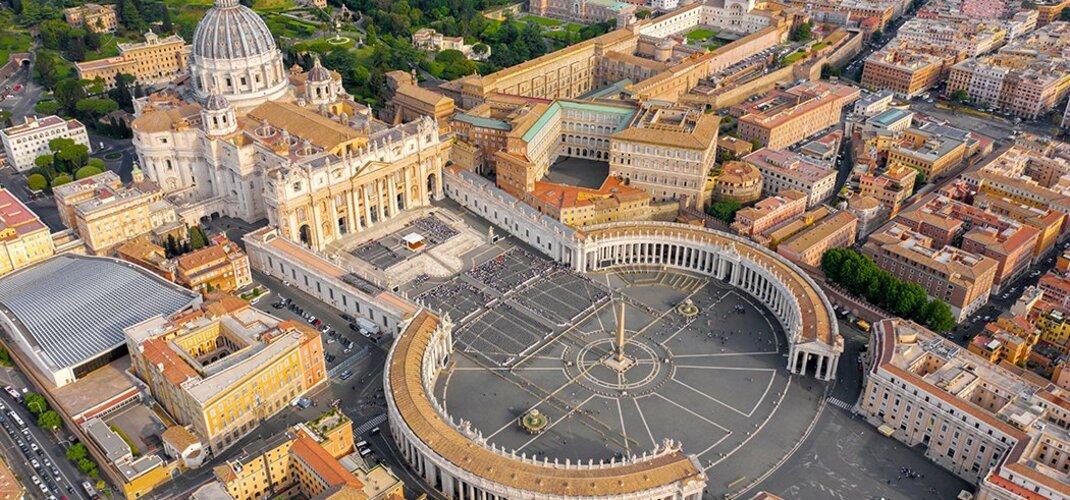
His famous colonnade at St. Peter’s Square creates an enormous spatial embrace around the piazza, while his Baldacchino inside St. Peter’s creates a dramatic focal point above the papal altar.
Bernini’s work helped establish the expressive and theatrical character associated with the Baroque.
Francesco Borromini
Borromini approached Baroque architecture differently.
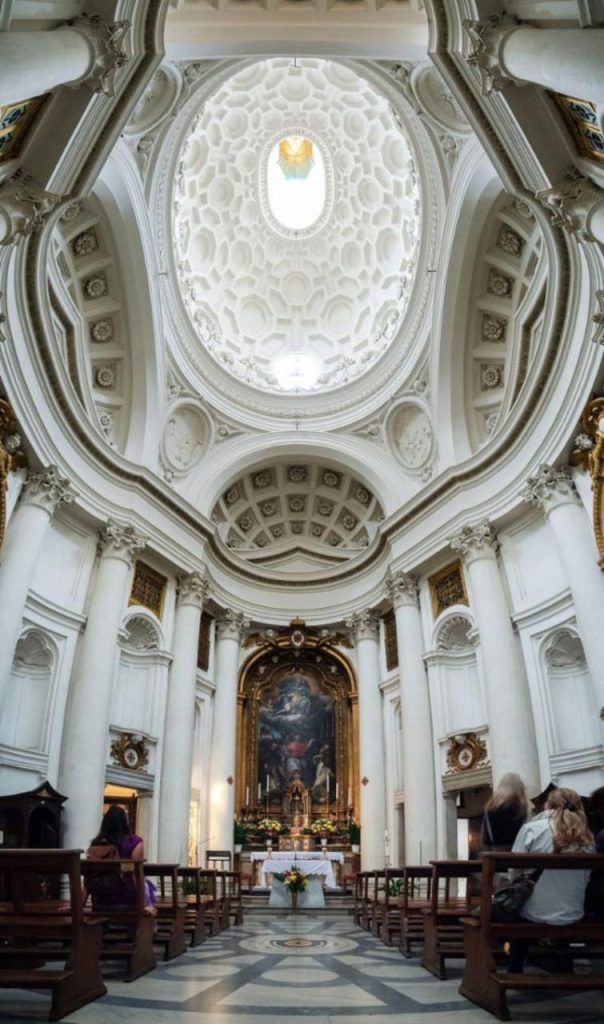
He was particularly interested in geometry, complex curves, and unusual spatial configurations. Buildings such as San Carlo alle Quattro Fontane and Sant’Ivo alla Sapienza demonstrate his ability to transform relatively complicated geometries into highly expressive spaces.
His architecture demonstrates that Baroque drama did not always depend on enormous scale. Even relatively small buildings could become visually powerful through geometry and spatial manipulation.
Pietro da Cortona
Pietro da Cortona contributed to the Baroque through both architecture and painting.
His architectural work demonstrates how façades, interiors, and urban spaces could be designed to create movement and visual drama. His work on Santa Maria della Pace in Rome is particularly notable for the way its curved façade engages with the surrounding piazza.
Baroque Architecture and Interior Design
The Baroque legacy is particularly important for interior designers because it transformed the interior into an active spatial experience.
Walls, ceilings, floors, furniture, sculpture, painting, and lighting could all contribute to the same visual narrative.
A Baroque-inspired interior might use:
- Dramatic contrasts of light and shadow
- Curved architectural forms
- Rich materials
- Sculptural furniture
- Elaborate ceilings
- Decorative mirrors
- Gilded details
- Strong visual focal points
- Layered spatial sequences
For contemporary designers, however, Baroque does not have to mean excessive decoration.
Its deeper lesson can be interpreted through movement, atmosphere, material contrast, lighting, and spatial drama.
A contemporary interior might therefore borrow the principles of Baroque design while using minimalist materials and modern technology.
Why Baroque Architecture Still Matters
Baroque architecture changed the relationship between people and buildings.
Instead of experiencing architecture as a static object, visitors could encounter it as a sequence of spaces, views, sounds, light conditions, textures, and emotions.
This idea remains extremely relevant to contemporary architecture and interior design.
Today, designers carefully consider how people enter a building, what they see first, how light changes during the day, and how materials influence atmosphere. In this sense, the Baroque interest in experience and spatial storytelling remains surprisingly contemporary.
The Baroque period also demonstrated the power of interdisciplinary design. Architecture, sculpture, painting, landscape, furniture, and lighting could be conceived as parts of a larger environment.
Famous Examples of Baroque Architecture
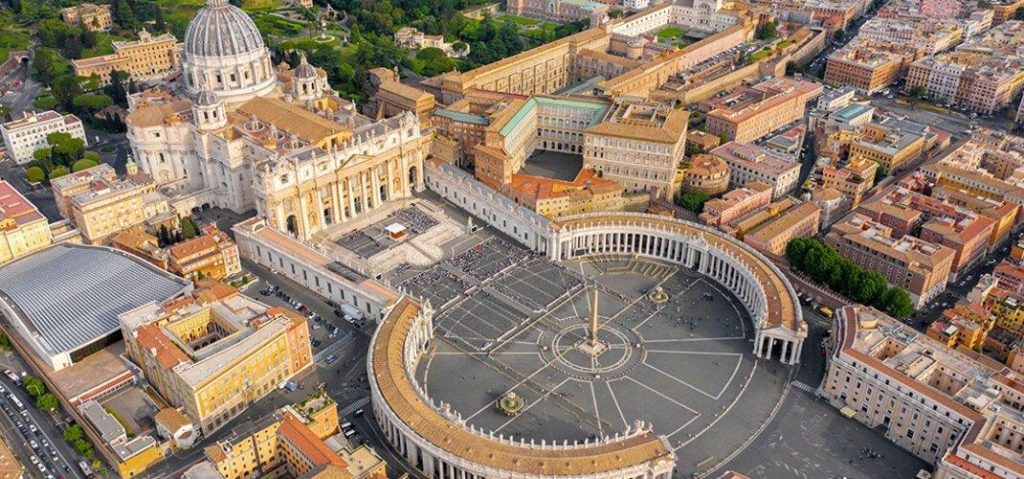
- The first image, from left to right: St. Peter’s Square: Bernini’s Monumental Baroque Embrace. Bernini’s colonnades transformed the area in front of St. Peter’s Basilica into a monumental urban space. Their sweeping curves organize movement and create a powerful relationship between architecture, people, and the city.
- The second image, from left to right: San Carlo alle Quattro Fontane: Borromini’s Dynamic Baroque Geometry. Borromini’s church demonstrates how curves, geometry, and spatial compression can produce an intense architectural experience. The building is especially important for understanding the inventive side of Roman Baroque architecture.
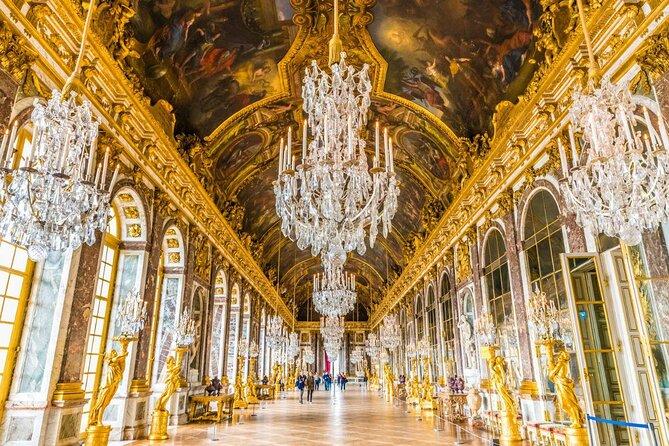
- The third image, form left to right: Palace of Versailles: Baroque Architecture, Power, and Spectacle. Baroque ideas developed differently outside Italy. At Versailles, architecture, interiors, gardens, sculpture, and ceremonial spaces were brought together to create an enormous environment of representation and power.
Conclusion
Baroque architecture transformed the controlled language of the Renaissance into something more dynamic and emotionally powerful.
Its architects used curves, light, sculpture, painting, ornament, and spatial movement to create environments that were meant to be experienced rather than simply observed.
From Bernini’s monumental spaces in Vatican City to Borromini’s complex Roman interiors, Baroque architecture demonstrated that buildings could become theatre, sculpture, landscape, and narrative at the same time.
For contemporary architects and interior designers, its most valuable lesson may not be its elaborate decoration, but its understanding of space as an experience.
Frequently Asked Questions
1. What architectural style came after Renaissance architecture?
Baroque architecture was the major architectural movement that developed after the Renaissance, beginning in Italy around the late 16th and early 17th centuries. It retained classical references but introduced greater movement, drama, ornamentation, and emotional expression.
2. What are the main characteristics of Baroque architecture?
The main characteristics include curved forms, dramatic spatial compositions, strong light and shadow, elaborate ornamentation, monumental scale, movement, and the integration of architecture with painting and sculpture.
3. Who are the most important Baroque architects?
Three particularly important figures are Gian Lorenzo Bernini, Francesco Borromini, and Pietro da Cortona. Bernini is known for his architectural and sculptural integration, Borromini for his innovative geometry and spatial forms, and Cortona for his combination of architecture, painting, and dramatic urban composition.
And this leads naturally to the next chapter of our architectural journey: Rococo architecture, where Baroque drama becomes lighter, more intimate, playful, and ornamental.
References
- The Metropolitan Museum of Art — Baroque Rome. A detailed resource covering Baroque architecture, urban planning, Bernini, Borromini, Pietro da Cortona, and the transformation of Rome.
The Metropolitan Museum of Art — Baroque Rome - The Metropolitan Museum of Art — Gian Lorenzo Bernini (1598–1680). Useful for Bernini’s architectural work, St. Peter’s, the Cornaro Chapel, and his contribution to Baroque visual language.
The Metropolitan Museum of Art — Gian Lorenzo Bernini - The Metropolitan Museum of Art — Rome and Southern Italy, 1600–1800. Provides historical context for the emergence and development of the Baroque in Italy.
The Metropolitan Museum of Art — Rome and Southern Italy, 1600–1800 - The Metropolitan Museum of Art — The Idea and Invention of the Villa. Useful for understanding how Baroque ideas of grandeur, spectacle, architecture, and landscape influenced villa design.
The Metropolitan Museum of Art — The Idea and Invention of the Villa - The Metropolitan Museum of Art — Francesco Borromini architectural studies. Includes original architectural studies for San Giovanni in Laterano and provides evidence of Borromini’s design process.
The Metropolitan Museum of Art — Borromini Architectural Studies
No responses yet