
What happens when architectural drama becomes more intimate, decoration becomes an art of its own, and grand spaces give way to elegant interiors filled with light, curves, and delicate details?
During the early eighteenth century, European architecture entered a new phase. After the monumental scale, dramatic compositions, and theatrical effects of the Baroque period, a different aesthetic began to emerge. Rococo architecture introduced a lighter, more playful, and more decorative approach to architectural design.
Originating in France during the early eighteenth century, Rococo first developed through interior decoration and the design of aristocratic residences. It gradually spread across Europe, particularly to Germany, Austria, and other parts of Central Europe, where it transformed palaces, churches, and ceremonial spaces.
While Baroque architecture often communicated religious authority, political power, and grandeur, Rococo explored elegance, intimacy, pleasure, and refinement.
This transformation did not mean abandoning the architectural language of the Baroque. Instead, architects and designers adapted its curves, spatial compositions, and decorative richness to create environments that felt more delicate, personal, and visually intricate.
Rococo therefore represents an important moment in architectural history: a transition from Baroque spectacle toward a more intimate and ornamental understanding of space.
From Baroque Grandeur to Rococo Elegance
Baroque architecture was characterised by dramatic movement, monumental compositions, strong contrasts of light and shadow, and elaborate decoration.
Rococo retained many of these elements but transformed their visual character.
Instead of monumental scale and overwhelming theatrical effects, Rococo designers increasingly focused on smaller, more intimate spaces. Private apartments, reception rooms, salons, and decorative chambers became important settings for architectural experimentation.
The transformation was particularly visible in France following the death of Louis XIV in 1715. During the Regency and the subsequent reign of Louis XV, aristocratic life increasingly centred around elegant private residences and social interiors.
Architectural decoration became more fluid. Heavy architectural frames gave way to delicate curves, intricate ornamental patterns, mirrors, and natural motifs.
The result was an architectural language that valued visual movement without necessarily relying on monumental scale.
What Are the Main Characteristics of Rococo Architecture?
1. Curved Lines and Asymmetrical Ornament
One of the most recognisable characteristics of Rococo architecture is its use of flowing, irregular, and often asymmetrical decorative forms.
Unlike the more controlled compositions associated with Renaissance architecture, Rococo designers explored free-flowing arrangements of ornament.
Shell-like forms, scrolling lines, foliage, flowers, and natural patterns appeared across walls, ceilings, furniture, and architectural frames.
The term rocaille, associated with rock and shell ornament, is closely connected to the development of the Rococo decorative vocabulary.
These motifs created a sense of movement and visual lightness, making architectural surfaces appear almost organic.
2. Light, Delicate, and Decorative Interiors
Rococo interiors moved away from the heavy and monumental atmosphere often associated with Baroque spaces.
Walls were frequently decorated with elaborate carved wooden panels, known as boiserie, alongside delicate stucco work, ornamental frames, and decorative mouldings.
White, cream, pale blue, soft green, and pastel pink became popular background colours, often combined with gilded details.
Rather than making every surface monumental, designers created intricate relationships between decoration, furniture, mirrors, and architectural elements.
The interior became a carefully coordinated composition in which every detail contributed to the atmosphere of the room.
3. Mirrors and the Experience of Light
Mirrors played an important role in Rococo interior design.
They reflected daylight, chandeliers, decorative surfaces, and the movement of people within a room. Combined with large windows and light-coloured interiors, they helped create brighter and more visually expansive environments.
Unlike the dramatic contrasts often associated with Baroque interiors, Rococo spaces frequently aimed for a softer and more continuous distribution of light.
Mirrors also blurred the visual boundaries between architectural surfaces, creating a sense of elegance and spatial complexity.
4. Nature-Inspired Decoration
Nature became an important source of inspiration for Rococo designers.
Flowers, leaves, shells, branches, birds, and flowing organic forms appeared throughout decorative compositions.
These motifs were not simply applied as isolated ornaments. They were integrated into wall panels, ceiling decorations, furniture, chandeliers, and sculptural details.
The relationship between architecture and nature became particularly visible in the decorative vocabulary of Rococo interiors.
Rather than representing nature through strict geometric arrangements, designers explored its irregularity, movement, and delicacy.
5. Intimacy and the Architecture of Social Life
Perhaps one of the most important differences between Baroque and Rococo architecture was the changing relationship between architecture and everyday life.
Baroque palaces frequently communicated the authority and public image of rulers through monumental spaces and ceremonial sequences.
Rococo interiors, by contrast, increasingly reflected the social culture of aristocratic residences.
Salons, private apartments, libraries, and reception rooms became carefully designed environments for conversation, entertainment, music, and social gatherings.
Architecture was no longer only a representation of power. It also became a setting for personal comfort, social interaction, and refined living.
Three Architects Who Shaped Rococo Architecture
Germain Boffrand
Germain Boffrand was an important French architect in the development of the Rococo architectural language.
His work helped establish a more fluid relationship between architectural structure and interior decoration.
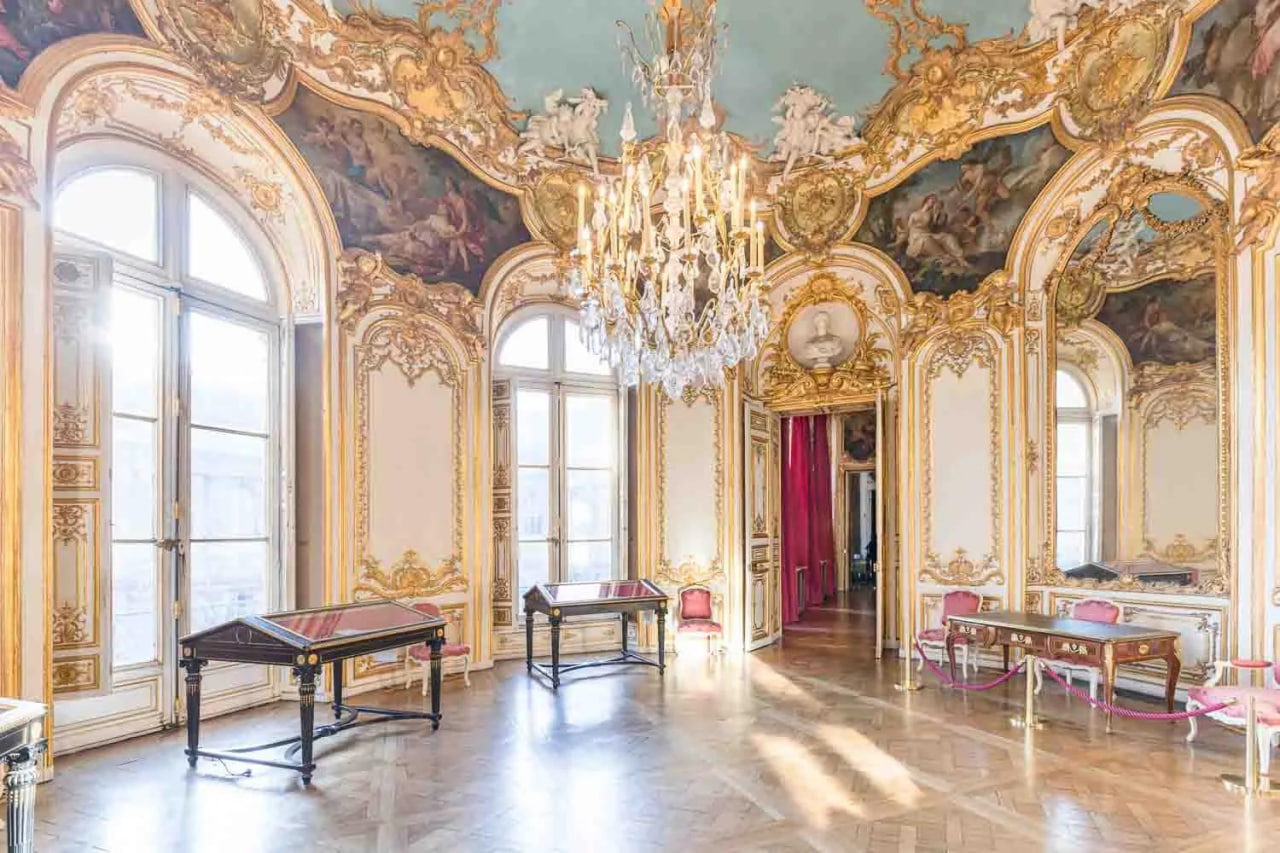
One of the most famous examples associated with his work is the Hôtel de Soubise in Paris, particularly the celebrated Salon de la Princesse.
The interior demonstrates how mirrors, ornamental frames, sculptural decoration, and curved lines could transform a reception room into an integrated artistic environment.
François de Cuvilliés
François de Cuvilliés was one of the most influential figures in the development of Rococo architecture in southern Germany.
His work combined French decorative influences with the elaborate artistic traditions of the German-speaking regions.
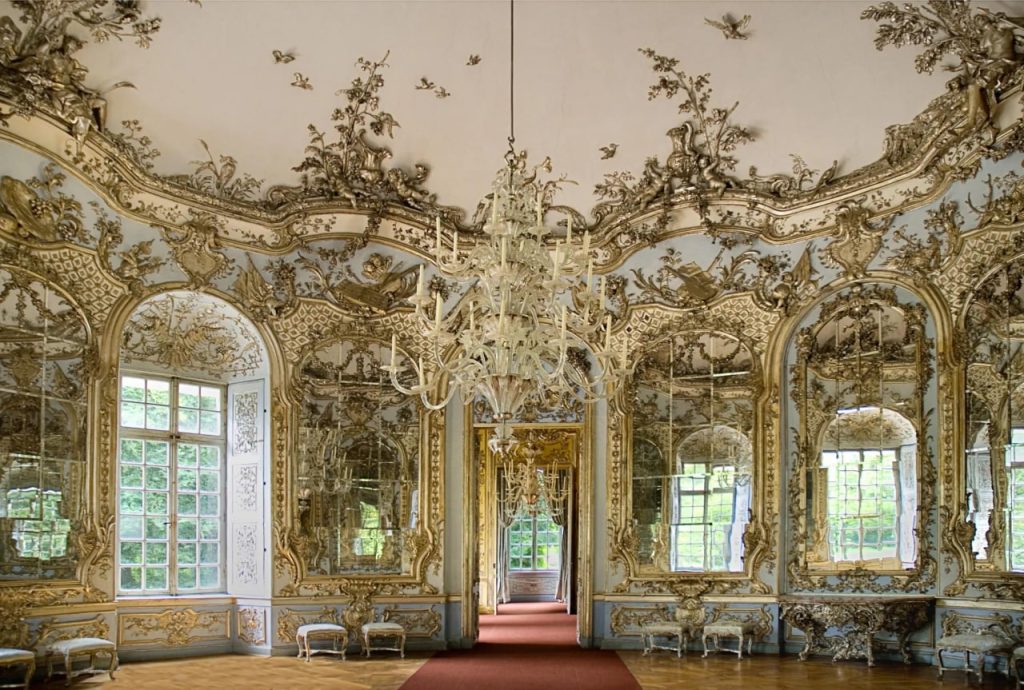
His most celebrated project is the Amalienburg, a small hunting pavilion in the grounds of Nymphenburg Palace in Munich.
The building is particularly famous for its Hall of Mirrors, where silver-toned surfaces, delicate ornamentation, and reflective materials create an extraordinary interior experience.
Amalienburg demonstrates how Rococo decoration could transform even a relatively small building into an elaborate architectural environment.
Balthasar Neumann
Balthasar Neumann played a central role in the development of eighteenth-century German architecture.
His work combined architectural planning, engineering, monumental spatial compositions, and elaborate decorative programmes.
The Würzburg Residence is one of the most important examples of this synthesis.
Its grand staircase, monumental interiors, and celebrated ceiling frescoes by Giovanni Battista Tiepolo demonstrate the extraordinary collaboration between architects, painters, sculptors, and craftsmen during the period.
Although the residence is fundamentally a Baroque palace, its interior decoration also incorporates important Rococo characteristics.
Neumann’s work demonstrates how Baroque and Rococo traditions could overlap rather than exist as entirely separate movements.
Rococo Architecture and Interior Design
Rococo is particularly important in the history of interior design because it transformed the relationship between architecture, decoration, furniture, and everyday life.
The interior was conceived as a unified environment rather than a collection of separate decorative objects.
Wall panels, mirrors, ceilings, chandeliers, furniture, textiles, and decorative sculptures were carefully coordinated to create a consistent visual atmosphere.
A Rococo-inspired interior might include:
- Curved and asymmetrical decorative details
- Ornamental wall panels and carved woodwork
- Mirrors integrated into architectural compositions
- Pastel colours and gilded accents
- Floral and nature-inspired patterns
- Decorative chandeliers and refined lighting
- Elaborate ceiling paintings and stucco work
- Elegant furniture with flowing lines
For contemporary interior designers, Rococo offers more than an opportunity to reproduce historical decoration.
Its deeper contribution lies in understanding how materials, light, furniture, colour, and ornament can work together to create an emotional and atmospheric experience.
A contemporary interpretation might use delicate curves, reflective surfaces, sculptural furniture, and subtle ornamental details without reproducing the full decorative richness of an eighteenth-century interior.
Why Rococo Architecture Still Matters
Rococo architecture demonstrates that architectural experience does not always depend on monumental scale or dramatic visual effects.
Its emphasis on intimacy, craftsmanship, decorative detail, and the relationship between different design elements remains relevant to contemporary interior architecture.
Today, designers continue to explore many of the ideas that Rococo helped develop: the use of mirrors to manipulate space, the integration of furniture and architecture, the expressive potential of ornament, and the importance of creating environments that support social interaction.
Rococo also reminds us that architecture is not only about structure and function. It is equally concerned with atmosphere, perception, comfort, and the emotional experience of space.
Although the style was relatively short-lived, its influence can still be recognised in decorative arts, furniture design, historic preservation, and contemporary interpretations of classical interiors.
Famous Examples of Rococo Architecture
Several buildings and interiors demonstrate the diversity of Rococo architecture across Europe.
1. Hôtel de Soubise, Paris, France
The Salon de la Princesse is one of the finest examples of French Rococo interior decoration. Designed by Germain Boffrand, it features elaborate ornamental frames, mirrors, curved lines, and delicate decorative compositions.
2. Amalienburg, Munich, Germany
Designed by François de Cuvilliés between 1734 and 1739, this hunting pavilion is celebrated for its Hall of Mirrors and extraordinary decorative craftsmanship.
3. Wieskirche, Bavaria, Germany
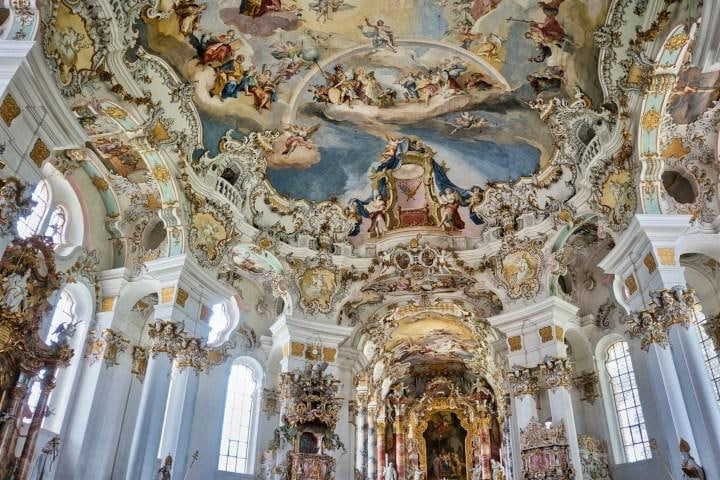
Designed principally by Dominikus Zimmermann, the Pilgrimage Church of Wies is an outstanding example of the integration of architecture, sculpture, painting, and light in the southern German Rococo tradition.
4. Würzburg Residence, Würzburg, Germany
Designed under the direction of Balthasar Neumann, this monumental palace brings together different European architectural traditions. Its staircase and decorative interiors demonstrate the close relationship between Baroque architecture and Rococo artistic expression.
5. Sanssouci Palace, Potsdam, Germany
Designed by Georg Wenzeslaus von Knobelsdorff for Frederick the Great, Sanssouci is an important example of the refined eighteenth-century palace architecture associated with the Frederician Rococo.
Conclusion
Rococo architecture transformed the monumental and theatrical language of the Baroque into something more intimate, delicate, and decorative.
Through flowing lines, asymmetrical ornament, mirrors, pastel colours, and elaborate interiors, architects and designers developed a new understanding of architectural space.
From the elegant salons of Paris to the extraordinary palaces and churches of Central Europe, Rococo demonstrated how architecture could become an expression of refinement, social life, and artistic imagination.
For contemporary architects and interior designers, its most valuable lesson may be the importance of treating the interior as a complete experience, where architecture, materials, light, furniture, and decoration work together.
And as Rococo gradually gave way to a renewed interest in classical simplicity, proportion, and historical references, European architecture began moving toward another major transformation: Neoclassicism.
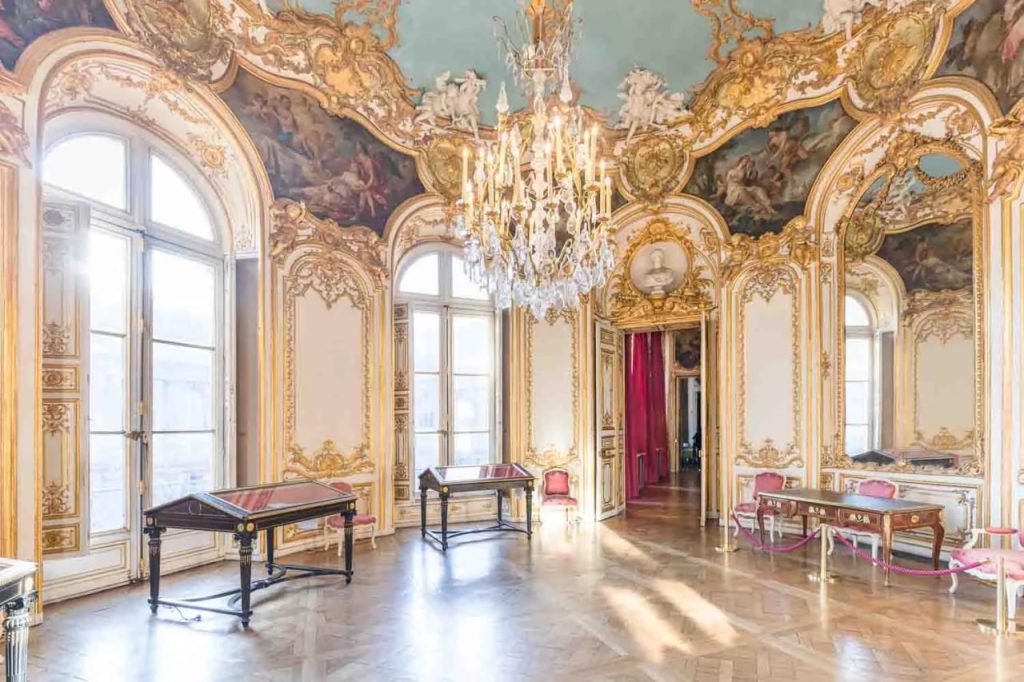
- The first image, from left to right: The Salon de la Princesse at Hôtel de Soubise is a masterpiece of French Rococo interior design. Created under architect Germain Boffrand, its delicate ornamentation, mirrors, and flowing forms demonstrate the elegance and refinement of eighteenth-century French interiors. Image reference: Hôtel de Soubise – Paris Official Website.
- The second image from left to right: Designed by François de Cuvilliés between 1734 and 1739, Amalienburg is one of the finest examples of German Rococo architecture. Its celebrated Hall of Mirrors demonstrates how reflective surfaces, delicate ornamentation, and sophisticated craftsmanship create an extraordinary interior experience. Image reference: Amalienburg – Bavarian Palace Administration.
- The third iamge from left to rght: Wieskirche, designed principally by Dominikus Zimmermann, is an outstanding example of southern German Rococo architecture. Its luminous interior combines architecture, sculpture, painting, and natural light to create a remarkable sense of movement and spiritual atmosphere. Image reference: UNESCO – Pilgrimage Church of Wies.
Frequently Asked Questions
Rococo was the major decorative and artistic development that followed Baroque architecture in the early eighteenth century. It introduced lighter forms, more delicate ornamentation, asymmetry, and intimate interior spaces. Neoclassicism subsequently emerged as a major movement in the later eighteenth century.
The main characteristics include asymmetrical ornamentation, curved lines, shell and floral motifs, pastel colours, gilded details, mirrors, elaborate wall panels, and integrated interior decoration.
Rococo developed in France during the early eighteenth century, particularly in the interior decoration of aristocratic residences. It later spread to Germany, Austria, and other European regions.
References
- The Metropolitan Museum of Art — American Rococo: https://www.metmuseum.org/de/essays/american-rococo
- Khan Academy — Architecture in 18th-Century Germany: https://www.khanacademy.org/humanities/renaissance-reformation/rococo-neoclassicism/rococo/a/architecture-in-18th-century-germany
- UNESCO World Heritage Centre — Würzburg Residence: https://whc.unesco.org/en/list/169
- Bavarian Palace Administration — Würzburg Residence: https://www.residenz-wuerzburg.de/englisch/residenz/index.htm
- The Metropolitan Museum of Art — The Wrightsman Galleries for French Decorative Arts: https://www.metmuseum.org/essays/the-wrightsman-galleries-for-french-decorative-arts

No responses yet